
If you’ve ever struggled to explain product details to a supplier — or received samples that look nothing like what you expected — you’re not alone. Miscommunication is one of the biggest challenges in global sourcing. That’s where a specification sheet comes in. It’s the foundation of every successful sourcing project, giving suppliers a clear, detailed picture of exactly what you want.
A well-prepared specification sheet does more than list product dimensions or materials. It sets clear expectations, ensures quality consistency, and helps you get accurate quotes from multiple suppliers. In this complete guide, we’ll walk you through what a specification sheet is, why it matters, and how to create one that keeps your sourcing process smooth, efficient, and mistake-free.
What Is a Specification Sheet?
So, what is a specification sheet exactly? Think of it as your product’s DNA — a single document that defines every essential detail of what you’re buying or producing. It tells your supplier exactly what the product should look like, how it should perform, and what materials should be used. From dimensions and color codes to packaging requirements, a specification sheet acts as the universal language between buyers and manufacturers.
In simple terms, it’s a blueprint for your product. Instead of relying on vague descriptions or verbal instructions, a specification sheet gives your supplier measurable, visual, and testable data. For example, if you’re sourcing custom tote bags, it should include fabric type, size, handle length, stitching method, and even logo placement. This level of clarity helps reduce misunderstandings — a study found that over 60% of production errors come from unclear specifications.
Why You Need a Specification Sheet in Product Sourcing?
A product specification sheet isn’t just a piece of paperwork — it’s the foundation of clear communication between buyers and manufacturers. When sourcing products from overseas suppliers, even small misunderstandings can lead to big losses. A well-defined specification sheet ensures everyone stays on the same page about product requirements, materials, dimensions, colors, packaging, and quality standards. In fact, sourcing experts estimate that over 70% of product disputes could be avoided with a clear and complete specification sheet.
Here’s why having a detailed product specification sheet matters:
- Avoid Miscommunication: It eliminates language and cultural barriers, ensuring suppliers understand exactly what you need.
- Guarantee Consistent Quality: Helps maintain the same product quality across different batches and production runs.
- Speed Up the Quotation Process: Suppliers can offer accurate pricing and lead times without repeated clarification.
- Protect Your Business Interests: Serves as a legal reference in case of product disputes or quality issues.
- Build Long-Term Supplier Trust: Clear documentation shows professionalism and reliability, encouraging smoother collaboration.
Simply put, a product specification sheet is your blueprint for successful sourcing — it saves time, prevents costly mistakes, and strengthens your supply chain efficiency.
Key Elements of a Specification Sheet
A strong specification data sheet includes all the essential details that define your product. It acts like a roadmap for manufacturers, quality inspectors, and buyers, helping everyone understand the same technical and visual standards. The more complete your sheet is, the fewer questions or production mistakes you’ll face later.
Here are the key elements every specification sheet should include:
- Product Identification – Start with the basics: product name, model number, SKU, and version. This keeps your sourcing process organized and avoids confusion when managing multiple variations.
- Dimensions & Weight – Precise measurements are critical. Include units (cm/inch) and tolerances. Even a 1 mm difference can cause problems in assembly or packaging. Adding diagrams or simple line drawings can make this part easier to visualize.
- Materials & Components – Clearly list all materials used, such as fabric type, metal grade, or plastic resin code. A specification data sheet that includes material details helps ensure consistent quality and compliance with import regulations.
- Color, Style & Design – Describe color codes (Pantone, HEX), surface finishes, and design features. Including reference photos or design renderings helps your supplier match your expectations.
- Function & Usage – Briefly explain how the product should perform or be used. This helps suppliers understand performance standards and functional goals, especially for mechanical or electrical items.
- Packaging & Labeling – Specify inner and outer packaging, labeling requirements, and barcode formats. A good specification data sheet often includes box dimensions and weight to simplify shipping and logistics planning.
- Quality Standards & Certifications – Include testing requirements, inspection levels, and certifications such as CE, RoHS, or ISO. This part builds trust with buyers and reduces compliance risks during customs clearance.
When every element of your specification data sheet is well-documented, your sourcing process becomes smoother, faster, and far less risky. It turns your product idea into a clear, actionable plan that manufacturers can follow with confidence.
Step-by-Step Process to Create a Specification Sheet
Creating a specification sheet is one of the most practical ways to ensure smooth communication between you and your suppliers. It turns product ideas into clear, actionable data. Below is a step-by-step guide that helps you create a complete, professional, and reliable document for product sourcing.
Step 1. Gather All Product Information
Start with the basics — and then dig deeper. Collect every detail about your product, including dimensions, materials, functions, finishes, colors, and packaging. For technical items, add voltage, power, or performance parameters. A comprehensive product specification sheet minimizes supplier assumptions and prevents production mistakes later.
💡 Pro tip: Create a checklist for at least 15–20 product attributes, especially if you’re managing multiple SKUs.
Step 2. Choose or Build a Template
Don’t reinvent the wheel. Use a specification sheet template in Excel, Google Sheets, or ERP systems. If your company has multiple product lines, keep the structure consistent — same columns, same terminology. This ensures readability and simplifies updates later.
Template Format Best For Example Excel or Google Sheets Most small to medium businesses Furniture, Home Decor PDF Fillable Form Factory documentation Electronics, Tools ERP System Form Larger enterprises Apparel, Auto Parts
Step 3. Add Clear Visuals and Diagrams
A picture is worth a thousand emails. Add product images, technical drawings, or exploded views that show key dimensions or components. Label them clearly — especially parts that require tooling, printing, or assembly. A visualized specification data sheet helps avoid misinterpretations that lead to costly sampling errors.
Step 4. Define Product Standards and Tolerances
Specify measurable standards like material grades, coating thickness, or ± tolerance levels. If you follow an international standard (like ISO, ASTM, or CE), note it in the sheet. This detail often determines whether your supplier delivers consistent quality or just “close enough.”
Step 5. Review and Verify All Details
Before you send it out, double-check. Cross-verify your information with product samples, CAD drawings, or test reports. A purchasing agent or sourcing team member should review every parameter to ensure alignment between documentation and actual production.
⚠️ Tip: 1 wrong millimeter or missing code could cost hundreds of dollars in rework or rejected batches.
Step 6. Control Versions and Track Updates
Products evolve — your specification sheet should too. Use version numbers (v1.0, v1.1, etc.) and note revision dates. Each update should explain what changed — e.g., “updated carton size,” “changed fabric type.” This avoids confusion across departments and suppliers.
Step 7. Get Supplier Feedback and Approval
After completion, share your document with your supplier for review. Encourage them to highlight unclear parts or suggest improvements. This collaboration helps detect issues early and shows mutual accountability. Always request their signed confirmation before production begins.
Specification Sheet Templates and Examples
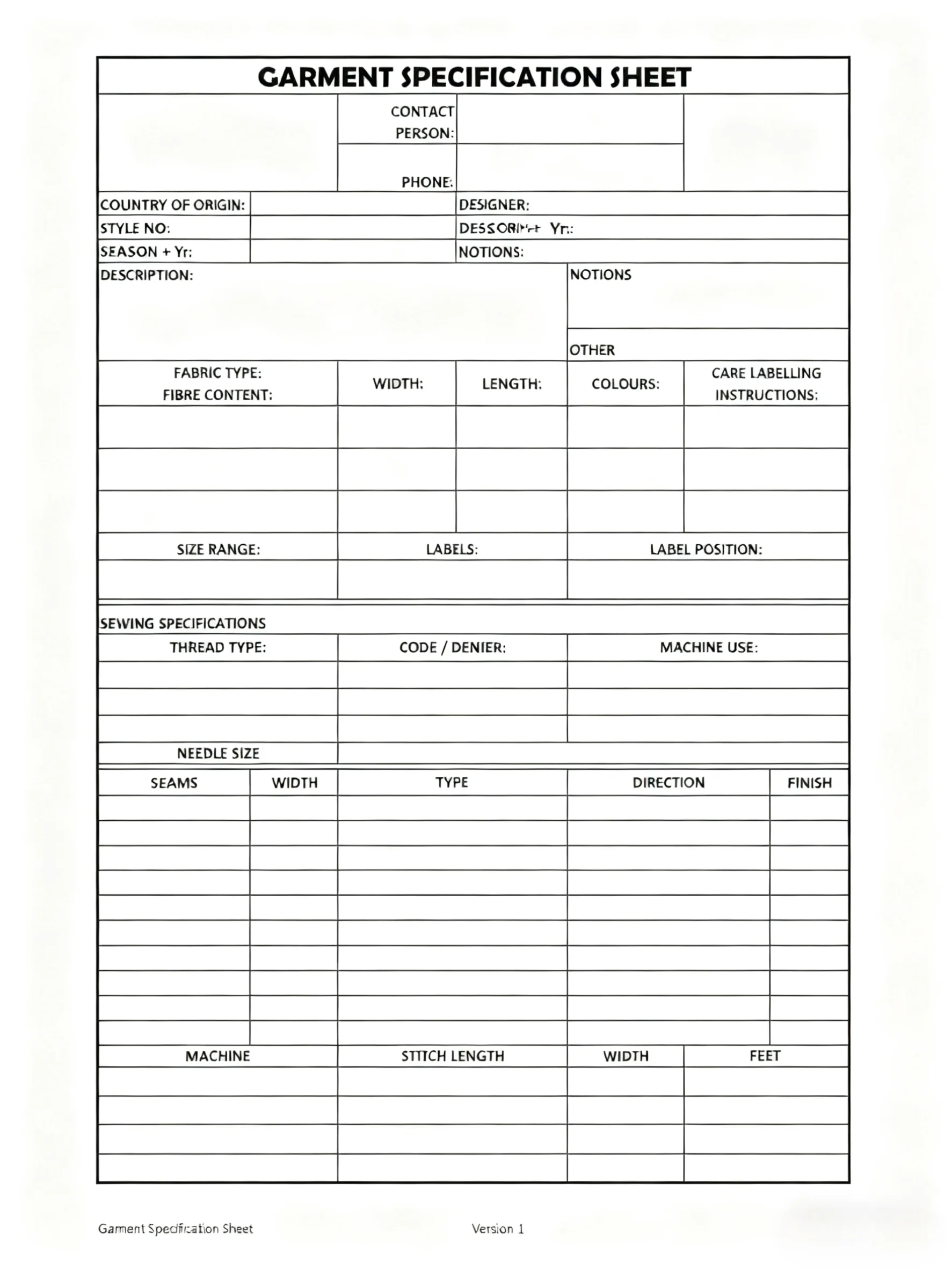
Apparel Product Specifications Template
Electronic Product Specifications Template
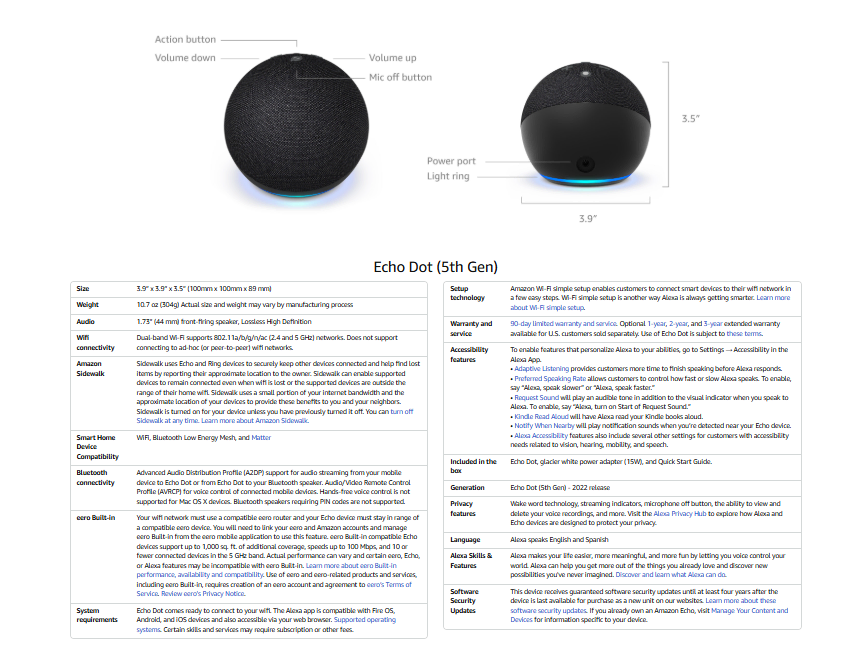
Source of information: Echo
Furniture Specification Template
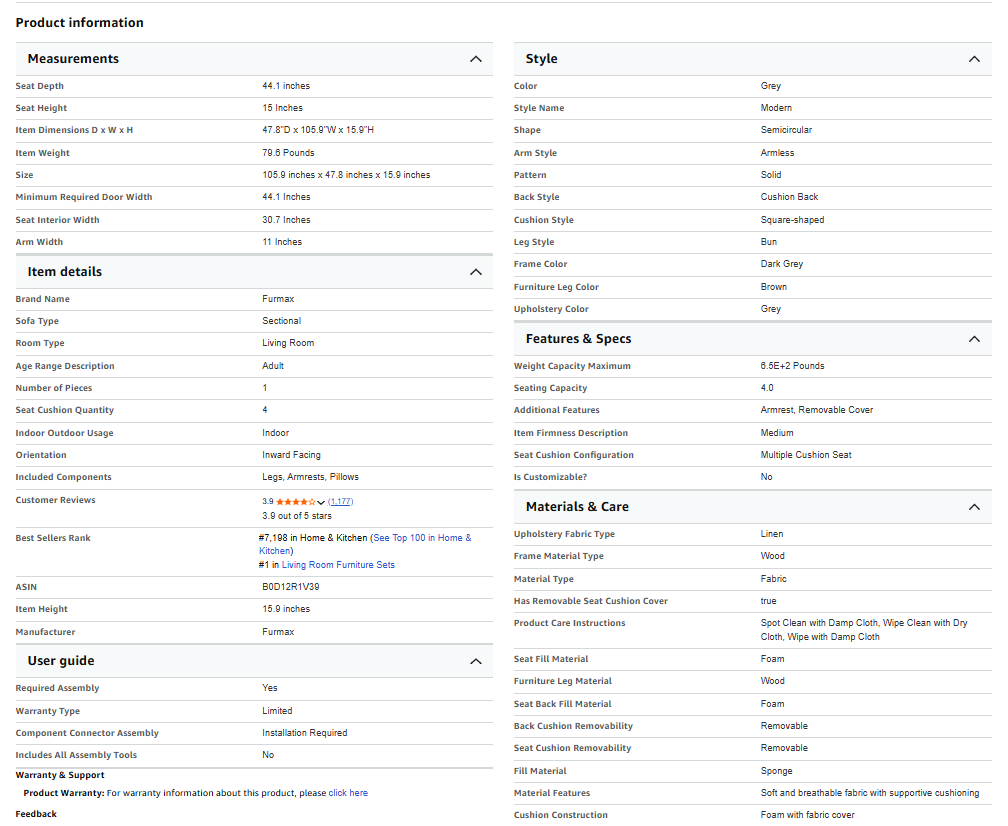
Source of information: Furmax
Tips for Using Specification Sheets Effectively
- Keep your specification sheet accurate and up to date. Outdated data can easily lead to production errors and costly delays.
- Use visuals such as diagrams or product photos to make key details clearer. Visuals help teams understand measurements and features quickly.
- Maintain a consistent layout across all product specification sheets so suppliers and designers can locate information fast.
- Share your sheets through cloud platforms or shared drives to improve real-time collaboration with your partners.
- Always refer to your specification sheet during production and quality checks to ensure every batch meets the same standard.
- Add version numbers and update dates to track changes and maintain full transparency throughout the sourcing process.
- Store all specification sheets in one organized system—digital folders, databases, or sourcing software—for easy access and management.
PREGUNTAS FRECUENTES
What is a product specification sheet and why is it important?
A product specification sheet is a document that outlines key details such as dimensions, materials, and functions. It helps ensure everyone—from suppliers to buyers—understands the exact product requirements.
Is there a difference between a product specification sheet and a specification data sheet?
Both terms are often used interchangeably. However, a specification data sheet tends to focus more on technical and material properties, while a product specification sheet covers both technical and functional aspects.
How do I create a specification sheet template for my products?
Start with a clear layout including all major product sections, then use Excel, Google Sheets, or Word to design a reusable specification sheet template for future projects.
Can I use one specification sheet for multiple products?
It’s better to create individual sheets for each product. Even similar items can differ in size, materials, or certifications, so separate product specification sheets help maintain clarity and accuracy.
Conclusión
This guide explains how to create a comprehensive specification sheet for product sourcing. It covers the purpose of a specification sheet, the essential components such as product dimensions, materials, certifications, and packaging details, and provides tips for accuracy and clarity. By following this guide, suppliers and buyers can ensure clear communication, reduce errors, and streamline the sourcing process.