
When sourcing products from Alibaba, shipping costs can often make up a significant portion of your overall expenses. For cross-border e-commerce businesses and bulk buyers, these costs are more than just a logistical consideration — they directly affect profit margins, pricing strategies, and market competitiveness. High shipping fees can eat into your profits, making it harder to offer competitive prices, while inefficient shipping choices can lead to delays and increased overhead.
This article will explore the key reasons behind high shipping costs on Alibaba, including factors like product size, shipping methods, and international logistics. We will also provide actionable tips on how to reduce shipping expenses, whether you’re sourcing for small-scale orders or large bulk purchases. By the end of this article, you’ll have a clearer understanding of how to manage shipping costs more effectively and make smarter, cost-efficient decisions when purchasing from Alibaba.
Common Causes of High Shipping Fees on Alibaba
When sourcing products from Alibaba, many buyers are surprised by the high shipping costs. These costs can quickly add up, affecting overall profit margins and pricing strategies. Several factors contribute to high shipping fees on Alibaba, each of which plays a significant role in determining the final cost of getting your goods from the supplier to your doorstep.
1. Product Weight and Size
One of the most direct factors influencing shipping costs is the weight and size of the product. Heavier or bulkier items require more resources to ship, whether by air or sea. Shipping companies charge based on the weight or volume (dimensional weight), and larger, heavier items take up more space in shipping containers or planes, leading to higher costs. For example, a heavy kitchen appliance or a large set of cookware will cost more to ship than smaller, lighter items like kitchen gadgets or utensils.
- How to manage: If possible, try to source lighter or smaller products or combine multiple smaller items into a single shipment to maximize space and minimize shipping costs.
2. Shipping Method (Air vs. Sea Freight)
Another critical factor is the shipping method you choose. There are typically two main options for international shipping: air freight and sea freight.
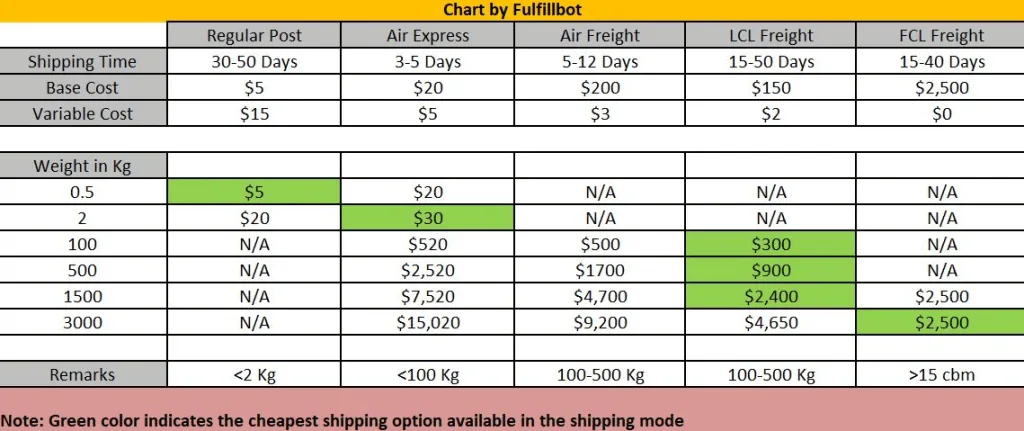
- Air freight is fast but expensive. It’s the go-to option for urgent shipments, but it comes with a premium price, especially for bulky or heavy goods. Shipping by air is priced based on weight and volume, and the cost can skyrocket for large shipments.
- Sea freight, on the other hand, is much more cost-effective for larger or heavier shipments but can take weeks to reach the destination. Container shipping is ideal for bulk orders, but it requires longer lead times, which can affect business operations if time is of the essence.
- How to manage: If time is not critical, opting for sea freight for larger orders can save significant money. For smaller, urgent orders, air freight might be unavoidable, but comparing shipping rates between providers can help minimize the cost.
3. Distance and Destination
The distance between the supplier’s location and the final destination also plays a major role in shipping costs. Shipping from China to North America or Europe can be far more expensive than domestic shipping within China or to nearby regions in Asia. Longer distances involve more complex logistics, higher fuel costs, and more time spent in transit, all of which contribute to higher shipping fees.
- How to manage: If possible, consider sourcing products from suppliers located closer to major ports or airports to reduce transportation costs. Also, planning ahead for longer delivery times can allow for cheaper shipping options.
4. Customs, Duties, and Taxes
When products enter a new country, they are often subject to customs fees, duties, and import taxes, all of which can significantly raise the cost of shipping. These fees depend on the product classification, country-specific regulations, and the value of the goods being imported. For example, electronics may face higher duties compared to textiles or kitchen tools.
- How to manage: Be sure to research your country’s import duties and taxes for specific types of products. Some Alibaba suppliers offer “DDP” (Delivered Duty Paid) shipping, which includes all taxes and fees in the price. Alternatively, you can handle customs clearance yourself if you have the proper knowledge.
5. Seller’s Choice of Logistics Partner
Sometimes, high shipping fees are the result of the seller’s logistics partner choices. Suppliers on Alibaba often partner with specific shipping companies, and their rates may not always be the most competitive. While these partners might offer convenience, they can come with a premium price tag. Additionally, sellers may mark up shipping fees to cover their own logistical costs or to account for profit margins.
- How to manage: If possible, negotiate shipping costs with the seller or ask for alternatives if the shipping fees seem too high. You may also want to look into using third-party freight forwarders that can often provide better rates or more flexible shipping options.
6. Packaging
The way a product is packaged can also influence shipping costs. Overly large or heavy packaging can increase the size and weight of the shipment, resulting in higher fees. Sellers sometimes use larger packaging to protect fragile goods, but if it’s not necessary, it can unnecessarily add to the overall shipping cost.
- How to manage: If you’re able to work with the seller, ask for minimal or efficient packaging that still ensures product safety but reduces unnecessary bulk and weight.
Quick Review Checklist: Common Causes of High Shipping Fees on Alibaba
| Cause | Why It Matters | Quick Tip |
|---|---|---|
| Product Weight & Size | Heavier or bulkier items cost more. | Choose smaller, lighter products. |
| Shipping Method | Air freight is fast but expensive; sea freight is cheaper. | Use sea freight for larger orders. |
| Distance & Destination | Longer distances increase costs. | Source from suppliers near major ports. |
| Customs & Duties | Taxes and customs fees can add up. | Check duties; opt for DDP shipping. |
| Logistics Partner | Some shipping partners are more expensive. | Negotiate rates or use freight forwarders. |
| Embalaje | Large or heavy packaging increases costs. | Request minimal packaging. |
Tech Insights: How Shipping Calculations Work
When sourcing products on Alibaba, understanding how shipping costs are calculated is essential for effective purchasing decisions. Shipping fees are influenced by a combination of factors including product weight, dimensions, shipping method, and destination. While many shipping companies follow similar rules, it’s important to recognize that actual shipping costs can vary based on the logistics company, the timing, and other variables.
1. Weight and Dimensions (Volumetric Weight)
Shipping costs are typically calculated based on either actual weight or dimensional (volumetric) weight, whichever is greater. Dimensional weight refers to how much space a package occupies in a shipping container or airplane, which can lead to higher shipping fees if the package is bulky but light.
- Formula for Dimensional Weight:
Dimensional Weight = (Length x Width x Height) ÷ Divisor (usually 5000 for international shipments) Example: A large box of light kitchen utensils may cost more to ship than a smaller, denser product because it takes up more space in transit.
2. Shipping Method (Air Freight vs. Sea Freight)
The choice between air freight and sea freight has a significant impact on shipping costs. Air freight is faster but more expensive, particularly for bulky items. It is usually calculated based on the greater of the actual weight or dimensional weight. In contrast, sea freight is more affordable for larger shipments but takes longer to deliver, and costs are often based on volume (cubic meters).
- Air Freight: Best for small, urgent shipments. Costs are higher due to speed.
- Sea Freight: Best for bulk orders. Slower but cost-effective for larger, heavier items.
3. Distance and Destination
The further the distance, the more expensive the shipping. Sending goods from China to North America or Europe can add significant costs due to the distance and logistical complexity. Additionally, certain regions may have higher shipping fees due to access to ports, shipping lanes, or remoteness from key transport hubs.
- Tip: If possible, source from suppliers closer to major international ports to reduce shipping time and cost.
4. Customs and Import Duties
Import taxes, customs duties, and other fees are another key component of the overall shipping cost. These charges are typically levied upon entering a country and are calculated based on the value of the goods. For example, electronics or premium kitchen appliances may incur higher duties compared to smaller, lighter items.
- Tip: Many suppliers on Alibaba offer DDP (Delivered Duty Paid) shipping, which includes customs fees and duties in the price. This can help avoid surprise charges upon arrival.
5. Additional Factors: Packaging, Fuel Surcharges, and Insurance
Sometimes, additional costs such as fuel surcharges and insurance are included in the total shipping price. For long-distance shipping or times of high fuel prices, these surcharges can be added to the base shipping cost. Furthermore, if you choose to insure your goods during transit, this will also be an additional charge.
- Tip: Opt for minimal, efficient packaging to reduce unnecessary bulk and weight, and discuss shipping options with your seller to avoid hidden fees.
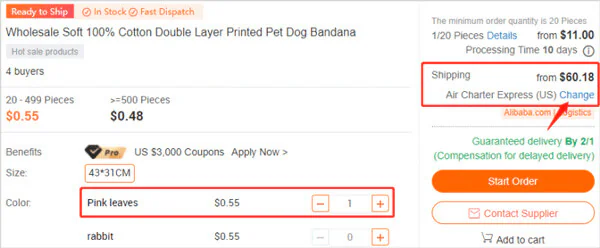
Alibaba Shipping Cost Calculator
Alibaba Shipping Cost Calculator
Practical Tips to Lower Alibaba Shipping Costs
High shipping costs can be a significant barrier when sourcing products on Alibaba. Fortunately, there are practical strategies that can help you lower these costs while maintaining efficiency. Here are some fresh, actionable tips to reduce your shipping expenses:
1. Consolidate Orders to Maximize Shipping Efficiency
Rather than placing multiple small orders, consolidate your purchases into one larger shipment. This helps reduce the cost per unit by fully utilizing the space in shipping containers or pallets. Bulk purchasing can significantly cut down the per-unit shipping cost and help streamline your logistics.
- Why it works: By consolidating multiple small orders into a single shipment, you reduce the frequency of shipments and lower overall shipping expenses.
2. Select the Most Efficient Shipping Method
Choosing between air freight and sea freight is essential to managing costs. Sea freight is generally cheaper for large shipments but takes longer, while air freight is faster but more expensive, especially for bulky items. Consider your business model and decide whether speed or cost-effectiveness is more important.
- Why it works: Sea freight is the best option for large orders that can afford a longer transit time. If you’re sending small or urgent orders, opting for air freight might be necessary, but always shop for the best freight forwarders to reduce costs.
3. Negotiate Better Rates with Suppliers or Freight Forwarders
Many suppliers and freight forwarders are open to negotiations, especially for bulk orders. By building a long-term relationship with your suppliers or freight companies, you may be able to secure discounted shipping rates or benefit from more affordable logistics options.
- Why it works: Frequent, high-volume buyers often qualify for better rates, and negotiation can lower hidden fees. Don’t accept standard rates — always ask for a better deal.
4. Optimize Packaging to Minimize Dimensional Weight
Large or unnecessarily padded packaging can increase the dimensional weight of your shipment, leading to higher costs. Ensure that your supplier uses optimized packaging — minimal but effective to protect the product.
- Why it works: More compact and efficient packaging reduces the physical space your product occupies, which helps lower shipping fees based on volume and dimensional weight.
5. Utilize DDP (Delivered Duty Paid) Shipping to Simplify Costs
When possible, opt for DDP (Delivered Duty Paid) shipping, where the shipping costs, customs fees, and import duties are pre-paid. This option can save you the headache of managing unexpected fees and simplify the logistics process.
- Why it works: DDP shipping includes all costs, which means no surprise charges upon arrival. This allows for better budget planning and simplifies the overall importation process.
6. Plan Shipments During Off-Peak Seasons
Shipping costs can fluctuate depending on seasonality. During peak seasons like the holidays or big sales events, shipping prices tend to rise due to high demand. By planning your shipments during off-peak times, you can avoid higher fees and take advantage of lower shipping rates.
- Why it works: During off-peak seasons, there is less demand for shipping space, which often translates into cheaper rates. Plan your bulk shipments ahead to avoid seasonal price hikes.
Real-Life Example of Reducing Shipping Costs: Industry Case Studies
Case 1: JAS Worldwide — Cutting Ocean Freight Costs for a Global Automotive Manufacturer
What They Did:
A global automotive manufacturer partnered with JAS Worldwide, a leading logistics provider, to address escalating ocean freight costs. By focusing on optimizing container load utilization, they increased the density of cargo packed in each container, reducing the empty space within the shipping containers. They also shifted to multi-modal transport, combining ocean freight with rail transport to further optimize the route and reduce costs.
Results/Savings:
- 30% reduction in container usage
- Saved over $300,000 annually by reducing empty space and optimizing container utilization.
Takeaway for Alibaba Buyers:
For businesses sourcing bulk items like kitchen appliances, cookware, and home goods from Alibaba, container load optimization can dramatically reduce the cost per unit. By working with your logistics provider to optimize space, you can make shipping more cost-effective and improve overall shipping efficiency.
Case 2: International Logistics Optimization — Reducing Costs with Smart Logistics Solutions
What They Did:
A leading logistics company in China applied smart logistics, focusing on route optimization, standardized packaging, and multi-modal transport (rail and ocean). They also utilized off-peak shipping periods to avoid high season rates. The company employed multiple carriers, comparing rates and services, to select the most cost-efficient options for each shipment.
Results/Savings:
- Achieved a 15–30% reduction in overall logistics costs.
- Improved shipment security y on-time delivery rates.
Takeaway for Alibaba Buyers:
If you’re regularly sourcing products in bulk or across multiple categories from Alibaba, consider adopting strategies such as multi-modal transport and off-peak shipping to reduce your logistics costs. Working with multiple carriers can provide you with more flexibility in terms of pricing and service. Additionally, improving packaging efficiency and aligning with suppliers who optimize their packaging can help you reduce the overall cost.
Recommended Products and Shipping Options
When sourcing from Alibaba, selecting the right shipping method is crucial for reducing costs and ensuring timely delivery. Here are some practical shipping options for different types of orders:
1. Small-Batch Orders
- Best Option: Air Freight or Courier Services (DHL, UPS, FedEx)
- Why: Fast delivery, ideal for urgent or small-volume orders.
- Best Products: Electronics, fashion accessories, and luxury items.
2. Custom Products
- Best Option: Air Freight for urgent orders, Sea Freight for larger custom orders.
- Why: Air freight ensures speed; sea freight is cost-effective for larger, less time-sensitive orders.
- Best Products: Custom kitchenware, personalized gifts, and tailored home goods.
3. Bulk Orders
- Best Option: Sea Freight (FCL/LCL) or Rail Freight (China to Europe/US).
- Why: Sea freight is cost-effective for large shipments; rail freight is a middle ground between cost and speed.
- Best Products: Kitchen tools, appliances, and bulk containers.
4. Perishable or Temperature-Sensitive Products
- Best Option: Reefer Containers (Sea Freight) or Temperature-Controlled Air Freight.
- Why: Ensures proper temperature during transit for perishable goods.
- Best Products: Fresh ingredients, pharmaceutical products, and specialty cookware.
Final Thoughts: Is It Worth Paying for Faster Shipping?
When sourcing products from Alibaba, deciding whether to pay for faster shipping depends on several factors, including your business needs, budget, and the urgency of your orders. While express shipping like air freight offers faster delivery, it comes at a higher cost. So, is it worth the extra expense? Let’s break it down:
When It’s Worth Paying for Faster Shipping:
- Time-Sensitive Orders: If you have urgent customer demand or are launching a new product, faster shipping ensures you meet deadlines and avoid stockouts.
- High-Value Products: For luxury items or high-demand goods, where speed is critical to securing sales, paying for quicker delivery makes sense to stay competitive.
- Small-Batch Orders: For small quantities that can be easily shipped via air, the convenience of faster delivery might justify the higher cost, especially for international markets.
When It’s Not Worth Paying for Faster Shipping:
- Bulk Orders: For large quantities or non-urgent shipments, sea freight or slower methods are much more cost-effective. Speed is less critical when you’re shipping in bulk.
- Established Products with Forecasted Demand: If your products have steady, predictable demand, you can plan ahead and opt for more affordable shipping methods.
- Cost-Sensitive Businesses: If your primary goal is to keep costs low, faster shipping may not be worth the premium. Instead, focus on consolidating shipments and utilizing multi-modal transport options.
Conclusion:
Paying for faster shipping is a good choice when speed is essential for meeting deadlines, securing high-value sales, or maintaining competitive advantage. However, for bulk or non-urgent shipments, slower, more economical options like sea freight can significantly cut costs. Ultimately, it’s about balancing speed with cost-efficiency based on your unique business needs.
FAQ: Common Questions About Alibaba Shipping
1. What is the cheapest shipping method on Alibaba?
The cheapest shipping method for small orders is often China Post or ePacket, which are economical for lightweight products. For larger shipments, sea freight or LCL (Less-than-Container Load) is the most cost-effective option.
How long does shipping take from Alibaba?
Shipping time from Alibaba depends on the shipping method:
· Air freight: 3–7 days
· Sea freight: 15–45 days
· Express shipping (DHL, FedEx): 3–5 days
Can I negotiate shipping costs with my Alibaba supplier?
Yes, many suppliers offer discounts on shipping for larger orders or if you use a specific freight forwarder. Always ask about potential shipping cost reductions, especially for bulk purchases.
What is DDP shipping?
DDP (Delivered Duty Paid) means the seller covers all shipping costs, including customs duties and taxes. This simplifies the process for you, as there are no additional fees upon arrival.
Can I get free shipping on Alibaba?
Some suppliers offer free shipping, but it’s usually included in the product price. It’s important to verify whether shipping costs are included or if they are added separately.
Sources and Additional Resources
- DHL: Global leader in express shipping and logistics, offering reliable international delivery services.
- PayPal: A secure payment platform widely used for international transactions, including Alibaba purchases.
About Sosourcing
En Sosourcing, we specialize in helping businesses source products from Alibaba, manage logistics, and handle wholesale distribution. We offer end-to-end solutions for shipping, sourcing, and exporting, making it easier for you to scale your business.