Choosing the right supply chain partner is one of the most important decisions for any business that buys, sells, or creates physical products. Yet many founders and buyers still struggle to understand the real differences between manufacturers, wholesalers, and distributors—let alone which partner best supports their goals. Each one plays a unique role in product availability, pricing, inventory risk, delivery speed, and long-term scalability. And your choice can directly impact your profit margins and market competitiveness.
This guide breaks everything down clearly and practically. We explain what each partner does, how they add value, how much they cost, and how they fit into different business models. You’ll also learn why more companies today use a hybrid strategy, working with multiple partners instead of relying on just one. Whether you’re sourcing your first product or optimizing an existing supply chain, this article will help you make smarter, more confident decisions.
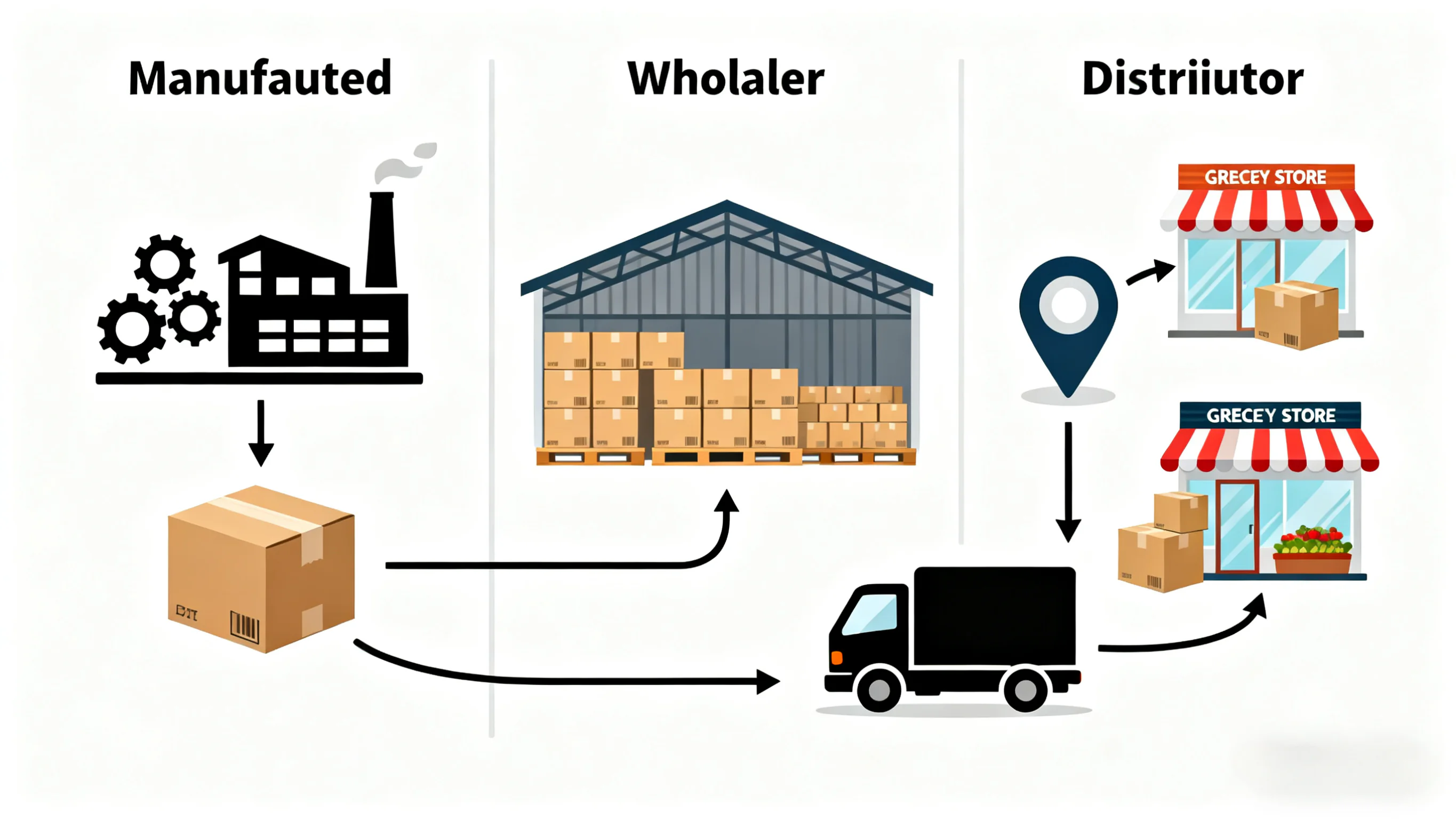
Manufacturer vs Wholesaler vs Distributor: Understanding the Supply Chain Roles
When products move from the factory floor to store shelves, they usually pass through several key players — manufacturers, distributors, and wholesalers.
Each plays a unique role in the supply chain, shaping how products are produced, priced, and delivered to market.
Understanding their differences helps you choose the right partner for your business and improve your profit margins.
What Is a Manufacturer?
A manufacturer is the starting point of the supply chain.
They are the companies that design, produce, and assemble goods from raw materials or components.
Manufacturers control product quality, cost, and customization — making them ideal for businesses looking for OEM or ODM services.
Key characteristics:
- They produce in bulk to lower per-unit costs.
- Most require a minimum order quantity (MOQ) — often ranging from 500 to 5,000 units depending on the product type.
- They rarely sell small batches or handle retail orders.
Пример:
A lighting manufacturer may produce 10,000 smart bulbs each month for global distributors.
They manage everything from design and component sourcing to quality control and packaging.
What Is a Distributor?
A distributor acts as a bridge between manufacturers and wholesalers or retailers.
They are often officially authorized to sell products from specific manufacturers in certain regions or industries.
Distributors help products reach the market efficiently by handling inventory, logistics, and marketing support.
Key functions include:
- Purchasing products directly from manufacturers.
- Managing regional or national distribution networks.
- Offering after-sales and technical support.
- Maintaining stable inventory to meet market demand quickly.
Пример:
A distributor of LED lighting may buy directly from multiple factories, store products in regional warehouses, and resell them to wholesalers or retail chains.
What Is a Wholesaler?
A wholesaler buys goods in large quantities from manufacturers or distributors, then resells them to retailers, e-commerce sellers, or small businesses.
They are essential for businesses that need quick restocks or can’t meet the high MOQs of manufacturers.
Core traits:
- Hold ready-to-ship inventory in warehouses.
- Offer smaller minimum orders — sometimes as low as 10 to 100 units.
- Provide fast shipping and flexible purchasing options.
Пример:
A home décor wholesaler may purchase various lighting products from several distributors and resell mixed orders to small retailers on Shopify or Amazon.
What Each Partner Brings to the Table?
Choosing between a manufacturer, wholesaler, or distributor isn’t only about price. It’s about the value each partner adds to your supply chain. Each role offers different strengths, and understanding these strengths helps you build a more stable and profitable sourcing strategy. Think of this section as a quick value map—clear, practical, and easy to compare.

What Manufacturers Bring to the Table?
Manufacturers offer the deepest level of production control. They can customize products, adjust materials, and scale output based on your demand. This is ideal if you want differentiation or private-label products. According to multiple B2B surveys, over 60% of brands prefer working directly with manufacturers when product customization is a priority. You also gain access to technical knowledge, engineering support, and long-term R&D collaboration. The trade-off? Longer lead times and higher MOQs—but you get full product ownership in return.
What Wholesalers Bring to the Table?
Wholesalers focus on speed, availability, and lower order thresholds. They buy in bulk from manufacturers and break down those shipments into smaller, more affordable units. This structure makes them perfect for small retailers, online sellers, and businesses testing new markets. Inventory risk is removed from your plate because wholesalers carry the stock, not you. Many wholesalers also offer simple credit terms, easy reordering, and fast shipping. If you need ready-to-ship inventory and flexible volumes, a wholesaler brings the agility that manufacturers typically cannot.
What Distributors Bring to the Table?
Distributors sit between manufacturers and wholesalers, but they add strategic value beyond simple inventory handling. They often manage sales channels, handle regional marketing, and provide technical support for complex products. In many industries—electronics, machinery, industrial tools—distributors are responsible for up to 70% of total market reach, acting as the manufacturer’s extended arm. They bring stronger logistics networks, warranty management, and after-sales service. If you want stability, structured supply, and established market coverage, distributors offer a more integrated partnership than wholesalers.
Cost & Profit Comparison: Where’s Your Margin?

Understanding where your profit comes from is just as important as choosing the right partner. Different supply chain roles create different cost structures, and these differences directly affect your margins, cash flow, and pricing flexibility. The goal here is to show you how each option impacts your bottom line in a simple, visual way.
To make it easier, here’s a quick comparison of the typical cost layers you’ll encounter when working with a manufacturer, wholesaler, or distributor:
Cost & Margin Structure Comparison
| Partner Type | Base Product Cost | MOQ Requirement | Add-On Costs | Typical Margin Potential |
| Производитель | Lowest | Высокий | Shipping, tooling, customization | Highest long-term margin |
| Wholesaler | Средний | Low–Medium | Storage, domestic shipping | Moderate margin with faster turnover |
| Distributor | Highest | Низкий | Service fees included, regional logistics | Lower margin but higher stability |
What This Means for Your Profit?
Working directly with a manufacturer gives you the greatest margin potential because you eliminate middlemen. But it also comes with higher MOQs and more operational pressure. Wholesalers offer safer pricing with smaller commitments, making it easier to test markets. Distributors provide the most predictable cost structure since pricing often includes support and logistics, though margins tend to be thinner.
A simple way to think about this:
- Want the highest margin? → Manufacturer
- Want the lowest risk? → Wholesaler
- Want stability and support? → Distributor
Your margin sweet spot depends on what you value more—profit, flexibility, or security.
Key Factors to Consider Before Choosing a Partner
1. Your Order Volume and Cash Flow
Order size determines who you should work with.
Manufacturers reward large, stable orders with lower unit costs. Wholesalers support small, flexible purchasing. Distributors often sit in the middle. Think about your cash flow as well. High MOQs can lock up capital, while small-volume purchases keep your budget lighter. Align your partner choice with what your cash flow can handle today—not in an ideal future.
2. Your Need for Product Customization
If customization matters, manufacturers are your only option.
They control materials, molds, and production lines. Wholesalers and distributors cannot change the product; they only sell what’s in stock. If you envision private-label products, unique features, or long-term product innovation, choose a partner who can support R&D. This is a long-term strategic advantage, not just a cost decision.
3. Your Required Speed and Inventory Risk
Speed changes everything.
Wholesalers offer the fastest turnaround because they hold inventory. Distributors also move quickly thanks to regional warehouses. Manufacturers, however, require longer lead times. Think about your risk tolerance. Do you want someone else to carry the inventory risk? Or are you comfortable forecasting demand and placing large orders in advance?
4. Your Market Complexity and After-Sales Needs
Some industries require installation support, warranties, or technical guidance.
Manufacturers focus on production, not service. In contrast, distributors excel at after-sales solutions, especially in categories like electronics, machinery, or industrial equipment. If your customers expect training, spare parts, or local support, a distributor might bring more value than a lower price ever could.
5. Relationship Strength and Communication Style
A strong relationship can save you from hidden problems.
Manufacturers may offer better long-term partnerships. Wholesalers prioritize fast transactions. Distributors focus on reliability and channel management. Consider how much communication you need: frequent updates? technical explanations? fast reorders? Your communication expectations should match their working style.
Hybrid Strategy: Why Many Businesses Partner with More Than One?
Many businesses no longer rely on a single partner. Instead, they combine manufacturers, wholesalers, and distributors to build a more flexible and resilient supply chain. This hybrid strategy reduces risk, speeds up market response, and gives brands more control over pricing and inventory.
A hybrid setup works because each partner fills a different gap. Manufacturers provide the lowest cost and the ability to customize. Wholesalers offer speed and smaller order quantities. Distributors bring regional coverage and service support. When these strengths come together, you get a supply chain that is both stable and adaptable.
This approach also helps brands handle market uncertainty. Demand spikes? Wholesalers can restock fast. Expanding to a new region? A distributor can manage local logistics and after-sales service. Developing a new private-label line? Your manufacturer handles R&D and production while your other partners keep your existing products flowing. Instead of depending on one supplier for everything, businesses distribute their risk across multiple channels.
Hybrid partnerships also improve margin control. You might source core products directly from a manufacturer to maximize profit, while relying on wholesalers for accessories or seasonal items that don’t justify large MOQ commitments. This combination helps maintain healthy cash flow without sacrificing product variety. It also makes it easier to test new categories before scaling up.
Finally, working with more than one partner increases your overall stability. If one partner faces stock issues, production delays, or shipping bottlenecks, you are not forced to halt operations. This resilience is especially important in global markets where supply chain disruptions can appear unexpectedly.
Заключение
Manufacturers, wholesalers, and distributors each play a different role in the supply chain, and none of them is universally “the best.” What matters is choosing the partner whose strengths match your business model—whether that’s low production cost, fast replenishment, or strong regional support. For many companies, the most effective approach is a hybrid strategy that combines multiple partners to achieve better flexibility, stronger margins, and a more stable supply chain.
But understanding these roles is only the first step. Executing the right sourcing strategy takes time, research, and reliable industry connections. If you want a simpler and more efficient way to source products, SoSourcing can help.
We connect you with verified manufacturers, trustworthy wholesalers, and reliable distributors—all screened to reduce risk and improve your negotiation power. Whether you need product development, quality control, or shipping management, we streamline the entire process so you can focus on growing your business.