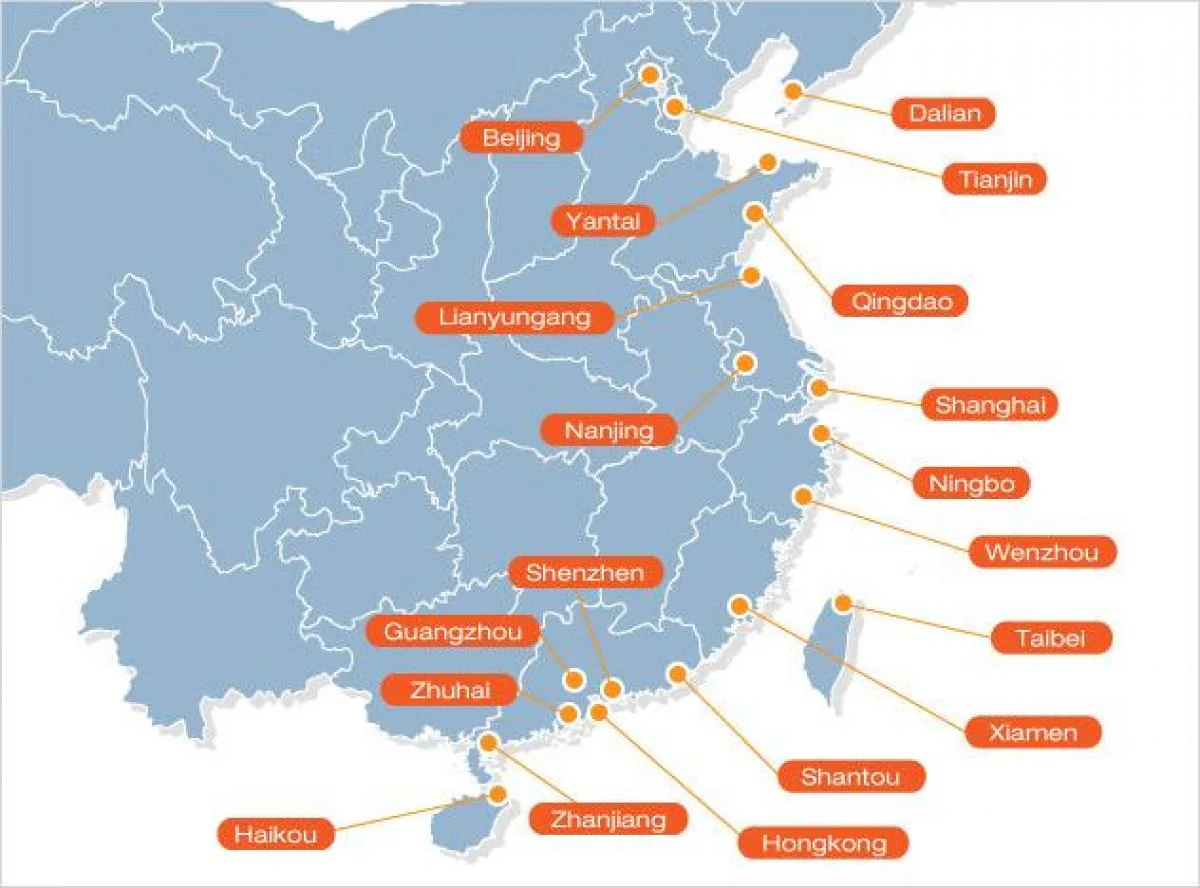
China’s economic strength is deeply connected to its powerful maritime network. As one of the world’s largest trading nations, China ports handle a vast majority of global cargo flow. From the mega-hub of Shanghai Port to the emerging gateways like Beibu Gulf Port, each China ports plays a crucial role in supporting international trade, logistics, and industrial development. This article introduces the 14 major trade ports across China, highlighting their key features, trade routes, and advantages that drive the nation’s global shipping power.
1. Shanghai Port China
Item
Details
Ubicación
Shanghai, China — at the mouth of the Yangtze River
Port Type
Comprehensive deep-water port (sea port + river port)
Main Functions
Container shipping, bulk cargo, liquid chemicals, Ro-Ro, and cruise services
Number of Terminals
Over 100 berths, with a majority dedicated to container handling
Major Container Terminals
Yangshan Deep-Water Port, Waigaoqiao Port Area, Wusong Port Area
Annual Container Throughput
About 47 million TEUs (2024, ranked No.1 globally)
Main Trade Routes
East Asia, North America, Europe, Australia
Main Import & Export Products
Exports: machinery, electronics, textiles, auto parts; Imports: raw materials, chemicals, machinery, agricultural products
Port Advantages
Strategic location, high automation, advanced logistics network, world-leading throughput capacity
2. Ningbo-Zhoushan Port
Item
Details
Ubicación
Ningbo & Zhoushan, Zhejiang Province, East China Sea coast
Port Type
Comprehensive port handling containers, bulk cargo, liquid chemicals, crude oil etc.
Main Functions
Container shipping, bulk cargo (iron ore, coal), crude oil & product oil, liquid chemicals, storage and transfer (CombineGoodz.com)
Major Container Terminals
Meishan Port Area (including No.10 berth) (ezhejiang.gov.cn)
Annual Container Throughput
~39.3 million TEUs in 2024 (ezhejiang.gov.cn)
Main Trade Routes
Over 300 routes, including international routes to Europe; sea-rail intermodal covering many Chinese provinces
Has two container terminals each handling over 10 million TEUs; leading in global cargo throughput; strong infrastructure expansion; automation / green/ intermodal transport network.
3. Guangzhou Port
Item
Details
Ubicación
Guangzhou, Guangdong Province, South China
Port Type
Comprehensive deep-water port, part of Guangzhou Port Group; includes sea-rail multimodal transport
— (specific number of container terminals not clearly found)
Major Container Terminals
Nansha Port (major unit) (Port of Nansha)
Annual Container Throughput
~25–27 million TEUs predicted/targeted by 2026; ~25.4 million TEUs recently
Main Trade Routes
International trade with >80 countries; growing sea-rail lines; strong connections within Greater Bay Area & global shipping lines
Port Advantages
Large cargo throughput; strategic hub in South China; increasing multimodal capacity; ambitious growth plans; rising container turnover; international hub status improving
4. Tianjin Port China
Item
Details
Ubicación
Tianjin, China — on the coast of the Bohai Sea
Port Type
Comprehensive deep-water port
Main Functions
Container shipping, general cargo, bulk cargo, international trade hub for Northern China
Number of Terminals
(Not found reliable number in current sources)
Major Container Terminals
Beijiang Port Area (including APM Terminals’ container berths)
Annual Container Throughput
Over 21 million TEUs
Main Trade Routes
Routes connecting with 500+ ports in over 180 countries/regions; important gateway for Beijing-Tianjin-Hebei region
Port Advantages
Key northern gateway; growing smart terminal construction; green / intelligent modernization; large network of container routes; strong growth in throughput
5. Shenzhen Port in China
Item
Details
Ubicación
Shenzhen, Guangdong Province, China — in the Pearl River Delta, South China
Port Type
Deep-water, multi-area comprehensive port (multiple port areas including container terminals, RoRo, bulk/liquid cargo etc.)
Main Functions
Container handling (exports & imports), Ro-Ro vehicle export, foreign trade cargo, modern logistics, maritime connections to global markets
Number of Terminals
Three major port terminal areas: Yantian, Nanshan, Dachan Bay; also other port-areas for different functions
Major Container Terminals
Yantian International Container Terminals (YICT) is a major container terminal; also the Yantian Port Area is key for foreign trade containers
Annual Container Throughput
Around 30+ million TEUs
Main Trade Routes
Extensive international trade routes especially to North America, Europe; many shipping lines in Yantian; Ro-Ro for vehicles exported globally; Shenzhen part of Greater Bay Area trade network
Main Import & Export Products
Exports: electronics, machinery, new energy vehicles; Imports: raw materials, consumer goods etc. (for example BYD car exports)
Port Advantages
Strategic location in South China / Pearl River Delta; multiple terminal areas specialized; strong export capability for vehicles; high throughput; good infrastructure; modern / deep-water berths; efficient customs & logistics support
6. Qingdao Port
Item
Details
Ubicación
Qingdao, Shandong Province, East China coast
Port Type
Comprehensive port, with deep-water container terminals, bulk cargo terminals, oil & liquid terminals, Ro-Ro for vehicles etc
Many terminals: e.g. New Qianwan automated container terminal, Qianwan United Container Terminal etc.; over 70 deep-water berths in various port areas across Qingdao Port cluster
Major Container Terminals
Qingdao New Qianwan Container Terminal (fully automated terminal), Qianwan United Container Terminal, other container terminals in Qianwan area
Annual Container Throughput
The New Qianwan automated terminal capacity ~5.2 million TEUs (for that terminal); the whole port handles several tens of millions TEUs annually (exact full-port total not always consistent in sources)
Main Trade Routes
Shipping to North America, Europe, Southeast Asia, connected via many global lines; also strong import routes for bulk resources; domestic rail and road connections for inland distribution
Main Import & Export Products
Exports: machinery & equipment, electronics, steel/metal products, textiles, garments; Imports: crude oil, iron ore, petroleum products, auto components etc
Port Advantages
Advanced automation (e.g. fully automated terminals), high depth berths capable of handling ultra-large container ships, diversified terminal functions (bulk, oil, Ro-Ro), strong infrastructure & technology upgrades, strategic energy import hub
Strategic location in Southern China, strong industrial base, significant role in Sinopec’s crude oil imports
Conclusión
Beyond understanding the major China ports, importers should also pay attention to shipping time, freight costs, and the overall logistics process when planning to import from China. Choosing the right partner can make a big difference in ensuring smooth and efficient trade.
En SoSourcing, we specialize in helping global buyers source high-quality products from China at the most competitive prices. Our team provides end-to-end support, from supplier matching to reliable shipping arrangements, making your sourcing journey easier and more cost-effective.
If you’re looking to wholesale or dropship from China, contact SoSourcing today — your trusted partner for seamless importing solutions.
Contains information about the traffic source or campaign that directed user to the website. The cookie is set when the GA.js javascript is loaded and updated when data is sent to the Google Anaytics server
6 months after last activity
_gat
Used to monitor number of Google Analytics server requests when using Google Tag Manager
1 minute
_gid
ID used to identify users for 24 hours after last activity
24 hours
_ga_
ID used to identify users
2 years
_gali
Used by Google Analytics to determine which links on a page are being clicked
30 seconds
_ga
ID used to identify users
2 years
__utmx
Used to determine whether a user is included in an A / B or Multivariate test.
18 months
__utmv
Contains custom information set by the web developer via the _setCustomVar method in Google Analytics. This cookie is updated every time new data is sent to the Google Analytics server.
2 years after last activity
__utmc
Used only with old Urchin versions of Google Analytics and not with GA.js. Was used to distinguish between new sessions and visits at the end of a session.
End of session (browser)
__utmb
Used to distinguish new sessions and visits. This cookie is set when the GA.js javascript library is loaded and there is no existing __utmb cookie. The cookie is updated every time data is sent to the Google Analytics server.
30 minutes after last activity
__utmt
Used to monitor number of Google Analytics server requests
10 minutes
__utma
ID used to identify users and sessions
2 years after last activity
_gac_
Contains information related to marketing campaigns of the user. These are shared with Google AdWords / Google Ads when the Google Ads and Google Analytics accounts are linked together.
90 days
Google reCAPTCHA helps protect websites from spam and abuse by verifying user interactions through challenges.
Name
Description
Duration
_GRECAPTCHA
Google reCAPTCHA sets a necessary cookie (_GRECAPTCHA) when executed for the purpose of providing its risk analysis.