When it comes to manufacturing, choosing the right model can make or break your business. OEM, ODM, and OBM represent three distinct approaches that define how your products are designed, developed, and branded. Understanding the differences between them helps you decide whether you need full control over design, prefer ready-to-sell solutions, or aim to build your own brand from scratch.
In this article, we’ll break down what OEM, ODM, and OBM mean, explore their key differences, weigh their pros and cons, and help you determine which model best suits your business strategy.
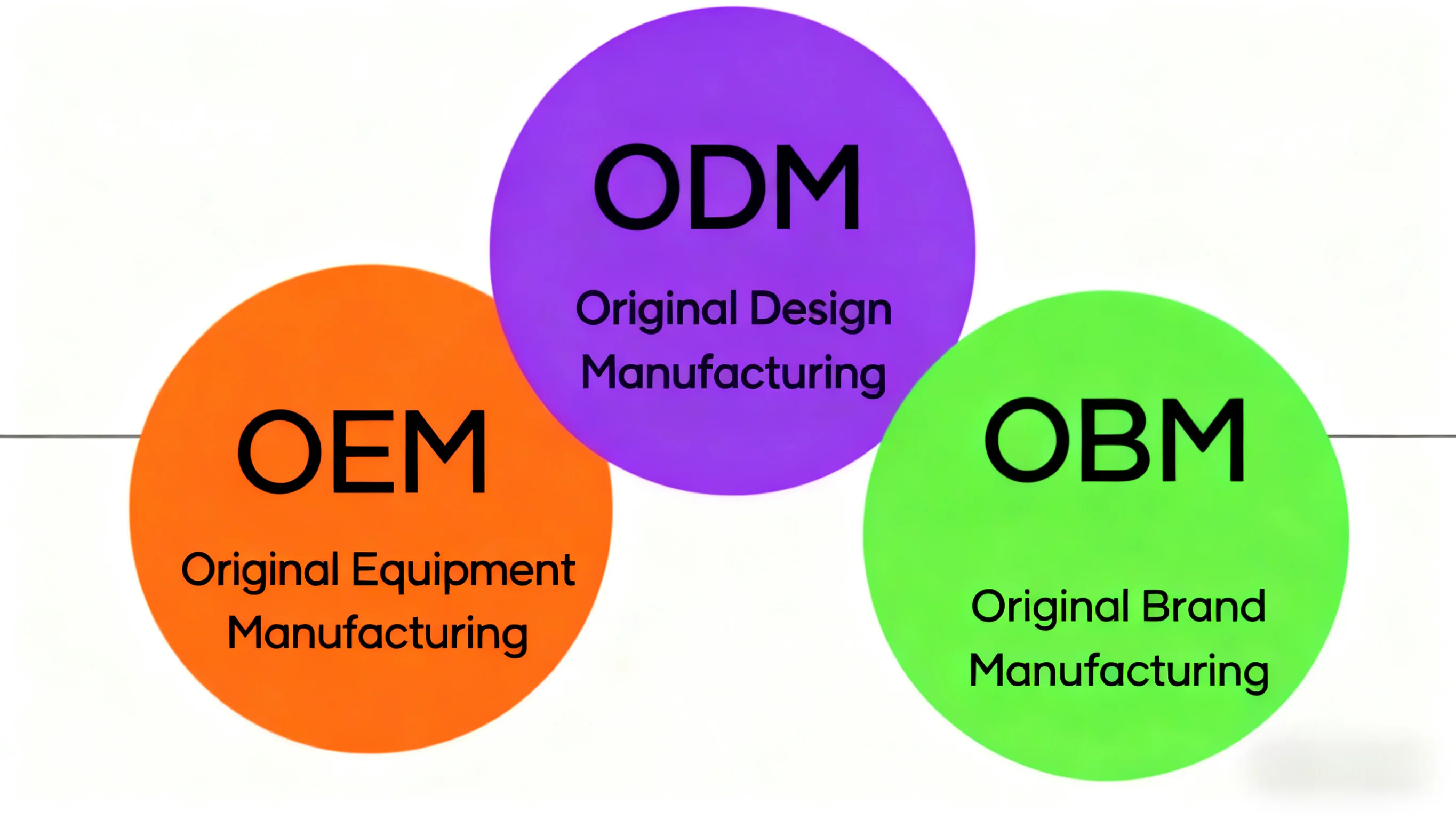
OEM vs ODM vs OBM: What Do These Models Really Mean?
When it comes to global manufacturing, the terms OEM, ODM, and OBM are often used—but many buyers still find them confusing. Each model represents a different level of control, creativity, and responsibility in the production process. Understanding these three concepts is the first step toward choosing the right partnership for your business.
what does oem mean?
OEM means the factory produces goods based on your design, specifications, and brand. In this model, you control the idea, the design, and the marketing strategy—while the manufacturer focuses on production. It’s perfect for businesses that already have a clear product concept but lack in-house production capacity. For example, Apple designs the iPhone, but the actual manufacturing is done by its OEM partners like Foxconn. This model gives you full control over branding but requires higher investment in design and R&D.
what is odm(Original Design Manufacturer)?
ODM takes a different approach. Here, the factory designs and develops the product, and you simply choose from their catalog or request small adjustments. You can then sell the product under your own brand name. This model works well for startups or brands that want to expand their product line quickly without investing heavily in design or engineering. For instance, many home appliance and lighting brands use ODM manufacturers to launch new models faster. It’s a cost-effective solution with shorter time to market—but customization is often limited.
what is OBM? (Original Brand Manufacturer)
OBM represents the next level—factories that both manufacture and sell under their own brand. These companies manage everything from design to marketing to after-sales service. They don’t just make products; they build a complete brand identity. Think of companies like Huawei or Xiaomi, which started as manufacturers but grew into strong global brands. OBM is ideal for businesses aiming for long-term brand value and independence, but it requires strong marketing, R&D, and supply chain management capabilities.
Together, these three models—OEM, ODM, and OBM—form the foundation of today’s manufacturing ecosystem. The main difference lies in who controls the design, brand, and final product. Once you understand these distinctions, you’ll be better equipped to choose the model that aligns with your business goals and market strategy.
Key Differences Between OEM, ODM, and OBM
Understanding the difference between OEM, ODM, and OBM is essential before choosing the right production model for your business.
While these terms are often used interchangeably, they represent very different levels of control, creativity, and responsibility.
Here’s a detailed comparison table to help you see how they differ:
| Aspect | OEM | ODM | OBM |
|---|---|---|---|
| Product Design | Provided by the buyer; factory follows exact specifications. | Designed by the manufacturer; buyer can request small modifications. | Fully created and owned by the manufacturer. |
| Brand Ownership | Brand belongs to the buyer. | Brand belongs to the buyer (rebranded from supplier’s design). | Brand belongs to the manufacturer. |
| R&D Involvement | High – buyer invests in product development and design. | Moderate – manufacturer handles most R&D work. | Very high – manufacturer manages entire R&D process. |
| Customization Level | Fully customizable according to buyer’s requirements. | Partial customization (color, logo, minor functions). | None – product and brand are predefined by manufacturer. |
| Minimum Order Quantity (MOQ) | Usually high, due to unique tooling and molds. | Lower, as products already exist in supplier’s catalog. | Depends on brand strategy; no OEM orders accepted. |
| Time to Market | Longer – requires product development and testing. | Shorter – uses existing product designs. | Fastest – ready-to-sell branded products. |
| Cost & Investment | Higher upfront costs (design, molds, testing). | Lower initial investment; fewer design costs. | Moderate to high – includes marketing and brand building. |
| Buyer’s Control | High – full control over product design and quality. | Medium – limited control over technical details. | Low – buyer acts as distributor or reseller. |
| Examples | Apple iPhone, Nike footwear, Dyson vacuum components. | Generic LED lights rebranded by retailers, kitchen appliances for private labels. | Huawei, Xiaomi, Samsung, Haier. |
Choosing between OEM, ODM, and OBM depends on your business size, resources, and long-term goals.
Startups often go for ODM to enter the market faster, while established brands prefer OEM for full customization.
OBM is ideal for manufacturers building their own global brand presence.
Pros and Cons of Each Manufacturing Model
Every manufacturing model—OEM, ODM, and OBM—offers different levels of control, investment, and flexibility.
Understanding their unique advantages and limitations will help you make smarter sourcing decisions and choose the model that fits your business stage and goals.
1. OEM
Pros:
- You have full control over the product design, materials, and specifications.
- Products are exclusive to your brand, helping you build strong market differentiation.
- Ownership of intellectual property gives you long-term business value.
- Ideal for established brands that already have design capability or unique ideas.
Cons:
- Requires high upfront costs for design, tooling, and testing.
- Development time is longer before mass production starts.
- Demands solid technical expertise and strict quality management.
- Minimum order quantities (MOQs) are usually high, limiting smaller businesses.
✅ Best for brands that prioritize originality, quality control, and product exclusivity.
2. ODM
Pros:
- Faster time to market since you can use existing product designs.
- Lower investment — you don’t need to spend heavily on R&D or engineering.
- Manufacturers already have proven molds, certifications, and supply chains.
- Great for startups or brands expanding their product range quickly.
Cons:
- Customization is limited to surface changes like color, logo, or packaging.
- Similar products might appear under other brands in the market.
- You don’t own the product’s design or technical IP.
- Harder to build a truly unique brand identity over time.
✅ Best for new or growing businesses that value speed, affordability, and reliability.
3. OBM
Pros:
- Full independence—manufacturer controls design, production, and branding.
- Higher profit margins by selling directly to end consumers.
- Builds a long-term, recognizable brand presence in global markets.
- Freedom to shape marketing strategy, customer service, and distribution channels.
Cons:
- Requires major investment in marketing, logistics, and after-sales service.
- Involves higher operational complexity and business risk.
- Building brand trust takes time, especially in new markets.
- Market fluctuations can directly impact brand reputation and revenue.
✅ Best for manufacturers ready to go beyond production and create their own international brand.
How to Choose the Right Model for Your Business?
1. Identify Where You Are in the Supply Chain
Your business stage determines which model makes the most sense.
- Importers or distributors often start with ODM manufacturers, since the products are ready to sell with minimal customization.
- Growing brands move toward OEM, creating exclusive products to strengthen brand loyalty.
- Established manufacturers evolve into OBM, owning both production and branding for maximum independence.
Think of it as a ladder — ODM → OEM → OBM — each step brings more control but also more responsibility.
2. Analyze Your Market and Competitors
Before choosing an OEM model or ODM solution, look closely at what your target market values.
| Market Type | Best-Fit Model | Why |
|---|---|---|
| Price-sensitive (e.g., developing regions) | ODM | Faster launch, lower cost, proven quality. |
| Trend-driven (e.g., home décor, gadgets) | ODM / OEM Hybrid | Combine speed with partial customization. |
| Brand-driven (e.g., consumer electronics, fashion) | OEM | Unique design and strong brand positioning. |
| High-end or niche markets | OEM / OBM | Control product innovation and build prestige. |
👉 Pro tip: Analyze your top 3 competitors — note whether their products are custom-built or generic rebrands. That’s often the clearest sign of which model dominates your niche.
3. Evaluate Your Control vs. Cost Ratio
Every business needs to balance control, speed, and investment.
Use this quick comparison framework:
| Priority | Recommended Model | Key Advantage |
|---|---|---|
| Control over design & quality | OEM | Full ownership and IP protection. |
| Faster market entry | ODM | Uses existing product designs and molds. |
| Brand-building & independence | OBM | Manages entire value chain from factory to consumer. |
If you’re early-stage, don’t over-invest in OEM too soon — you might spend heavily before verifying market demand.
If your products are already proven sellers, switching to OEM helps build brand equity and pricing power.
4. Think About Long-Term Brand Positioning
Your choice of model affects not only production but also brand perception.
- ODM lets you launch fast but offers limited differentiation — great for testing new categories or seasonal products.
- OEM strengthens your brand’s credibility by giving you full creative control.
- OBM transforms you from a supplier into a global brand — but it demands marketing strength and long-term commitment.
If your goal is to own customer trust and pricing power, OEM or OBM is a better investment in the long run.
Conclusion
OEM, ODM, and OBM each offer unique opportunities for businesses depending on their goals, resources, and level of control over product development. OEM is ideal for brands seeking full customization and exclusivity. ODM suits companies looking for faster time-to-market with minimal design involvement. OBM empowers businesses to take full ownership of their products and brand identity.
At SoSourcing, we understand that every business has different needs. That’s why we provide flexible OEM and ODM services to help you turn your ideas into market-ready products. From concept design and material sourcing to production and quality inspection, our expert team ensures you get reliable, high-quality manufacturing support every step of the way.