A first-time buyer came to China to source consumer products.
He started in Yiwu for its low MOQ and wide product selection, but struggled when trying to scale with consistent quality. He then moved to Guangzhou, expecting the same flexibility, only to face higher MOQs and longer lead times.
Yiwu market vs Guangzhou is one of the most common comparisons first-time buyers make when sourcing from China—but it is also one of the most misunderstood. This guide breaks down how China’s wholesale markets actually work, explains the real differences between Yiwu and Guangzhou, uncovers common sourcing mistakes, and provides a clear decision framework to help buyers choose the right market based on product type, order size, and business stage. It also introduces other major China wholesale markets to give a broader, more practical view of global sourcing options.
Understanding the Role of China’s Wholesale Markets in Global Sourcing
For decades, China’s wholesale markets have played a central role in global sourcing.
They are not just places to buy products—they are entry points into China’s supply chain.
Unlike many countries where sourcing happens mainly through online platforms or direct factory outreach, China has built large-scale, offline wholesale ecosystems. These markets connect thousands of suppliers, manufacturers, and trading companies in one physical space. For global buyers, this means faster product discovery, real-time price comparison, and direct access to suppliers.
According to industry estimates, over 60% of small and mid-sized international buyers entering China for the first time visit a wholesale market before contacting factories directly. For many, markets such as the yiwu wholesale market or the guangzhou wholesale market are the starting point of their sourcing journey.
To understand why Yiwu and Guangzhou are so often compared, it is first necessary to clarify what a “wholesale market” really means in the Chinese context.
What a “Wholesale Market” Really Means in China?
In China, a wholesale market is not simply a resale center. It is a hybrid sourcing hub that brings together different layers of the supply chain.
A typical wholesale market may include:
- Trading companies representing multiple factories
- Factory-backed showrooms
- Independent distributors and exporters
- OEM/ODM product developers
This structure is very different from what many first-time buyers expect. When visiting the yiwu china market or the guangzhou wholesale market, buyers are not dealing with one single supplier type. Instead, they are navigating a network that combines manufacturing, packaging, logistics, and export services.
For example, the yiwu market china is widely known for its extremely high SKU density. One visit allows buyers to compare hundreds of similar products within minutes. This makes it ideal for product testing, mixed orders, and fast market validation.
Wholesale markets also reduce sourcing friction:
- No long email back-and-forth
- Face-to-face negotiation
- Immediate sample access
This is why, even in the era of B2B platforms, offline markets remain highly relevant in global trade.
Why Yiwu and Guangzhou Are the Two Most Compared Markets?
Among all Chinese sourcing hubs, Yiwu and Guangzhou stand out as the most frequently compared. This is not by chance.
First, both cities are deeply integrated into global trade networks.
Yiwu exports products to more than 230 countries and regions, while Guangzhou has long been a gateway for China’s manufacturing industries and international exhibitions.
Second, they represent two very different sourcing models.
The yiwu wholesale market is best known for:
- Small commodities and daily-use products
- Massive product variety
- Low minimum order quantities
In contrast, the guangzhou wholesale market is closely tied to regional industrial clusters. Buyers searching for apparel, bags, electronics, or home appliances often associate Guangzhou with stronger customization and production depth. This is why searches related to china wholesale market guangzhou often come from buyers with clearer product plans and higher volume expectations.
Finally, both markets are highly visible online.
Search terms like yiwu china market and yiwu market china consistently attract global traffic, while Guangzhou-related queries are often linked to industry-specific sourcing needs. This online exposure reinforces the perception that these two markets are direct alternatives—when in reality, they serve different purposes.
Understanding these structural differences is essential. Without this context, first-time buyers often compare Yiwu and Guangzhou on the wrong criteria, which leads to poor sourcing decisions later.
Yiwu Market Explained: Structure, Strengths, and Limitations
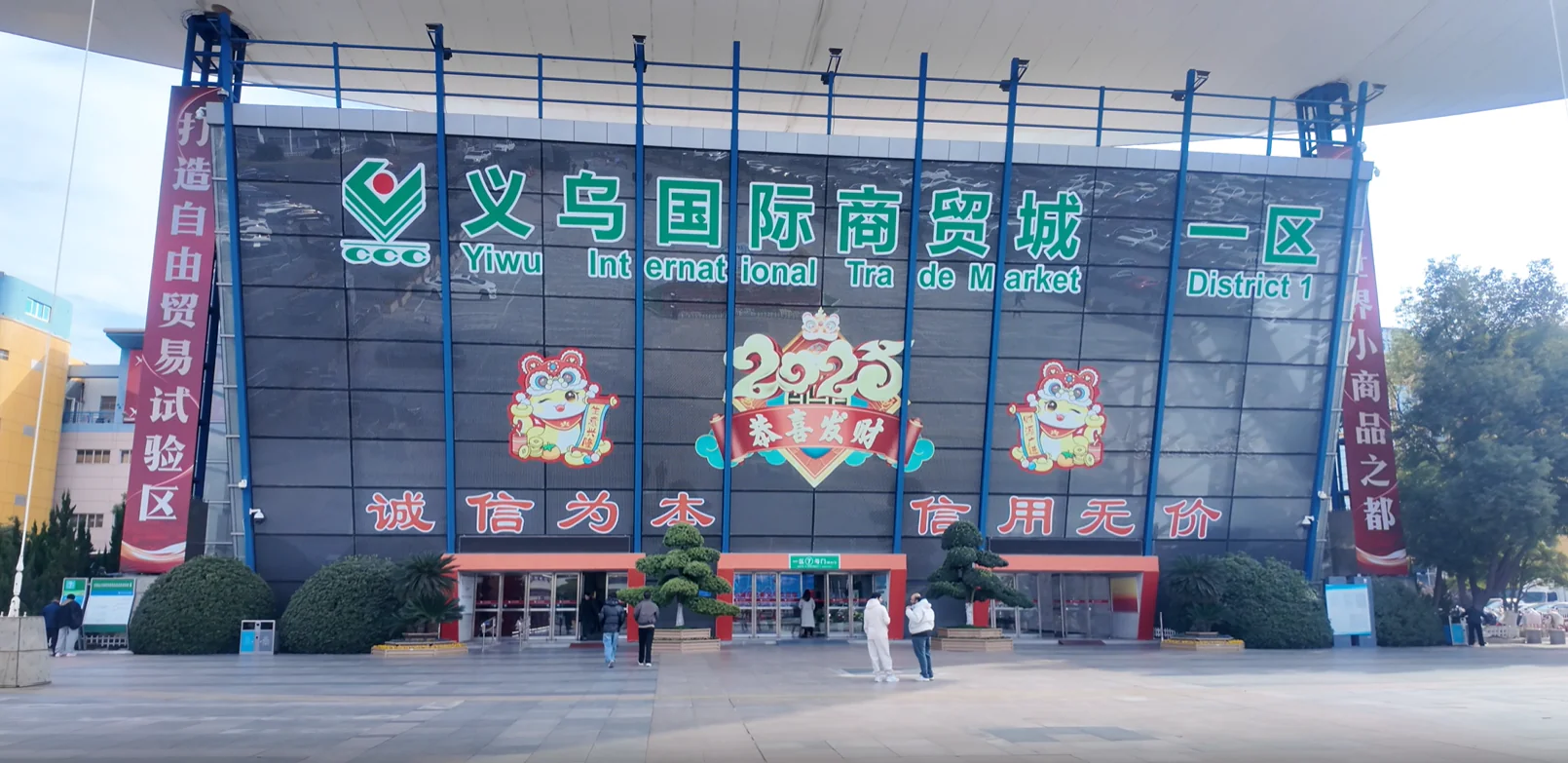
The Yiwu market is often described as the world’s largest small-commodities wholesale hub. For first-time buyers, it is usually the most accessible entry point into China’s offline sourcing ecosystem. Understanding how the market works—and where it performs best—helps buyers avoid unrealistic expectations.
3.1 What Yiwu Market Is Best Known For?
The Yiwu wholesale market is best known for its unmatched product variety.
It specializes in small, standardized consumer goods rather than heavy industrial products.
Typical product categories include:
- Home and kitchen accessories
- Gifts and promotional items
- Stationery and office supplies
- Fashion accessories and seasonal products
What makes the yiwu market china stand out is scale. Public data shows that the market hosts 75,000+ suppliers and displays millions of SKUs across multiple districts. This density allows buyers to compare prices, designs, and packaging options within a very short time.
Another defining feature of the yiwu china market is its global focus. A large share of vendors are experienced exporters. Many booths already understand international packaging standards, labeling requirements, and basic compliance expectations for overseas markets.
3.2 How the Yiwu Market Is Structured
The Yiwu market is highly organized despite its size.
It is divided into several large districts, with the International Trade City being the most well-known.
Each district is further segmented by product category and floor level. This structure makes navigation more efficient for buyers who arrive with a clear sourcing plan.
From a supplier perspective, most vendors in the yiwu wholesale market operate as:
- Trading companies with access to multiple factories
- Factory-backed showrooms
- Export-oriented distributors
Unlike traditional factories, many Yiwu suppliers focus on speed and flexibility. Mixed orders, small trial quantities, and fast quotation cycles are common. This explains why the yiwu market china is often recommended for product testing and early-stage sourcing.
3.3 Strengths and Limitations of Sourcing from Yiwu Market
Sourcing from the Yiwu market offers clear advantages—but also important limitations that first-time buyers should understand.
Key Strengths
- Low minimum order quantities, ideal for testing new products
- One-stop sourcing for multiple product categories
- Fast product turnover and trend responsiveness
- High level of export familiarity among suppliers
These strengths make the yiwu wholesale market especially attractive for small and mid-sized importers entering China for the first time.
Key Limitations
- Quality levels can vary significantly between suppliers
- Limited support for complex customization or tooling
- Not all vendors control their own production
- Less suitable for large-scale, long-term manufacturing projects
In short, the Yiwu market excels at variety, speed, and flexibility, but it is not designed to replace factory-direct sourcing for complex or high-volume products.
Guangzhou Market Explained: Structure, Strengths, and Limitations
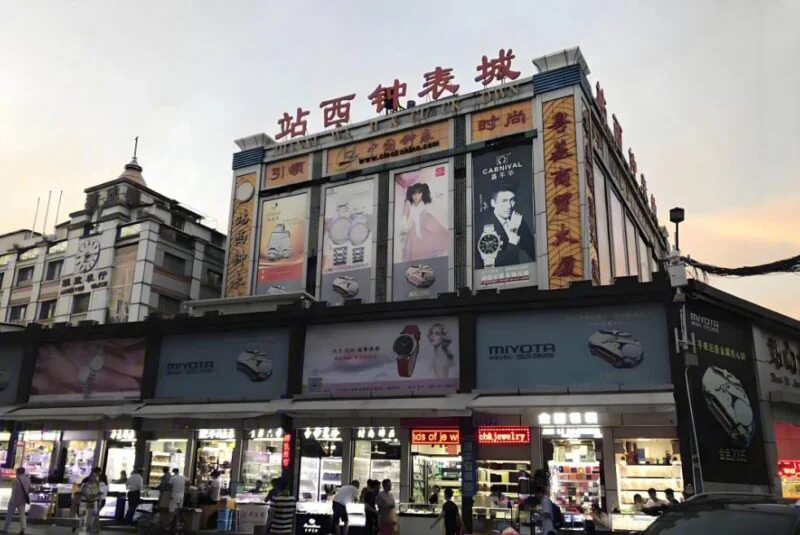
Guangzhou is one of China’s most important commercial cities and a long-established hub for manufacturing and export trade. Unlike Yiwu, Guangzhou wholesale markets are deeply connected to regional industrial clusters, which shapes how sourcing works in this city.
For buyers comparing Yiwu and Guangzhou, understanding these structural differences is essential before making any sourcing decision.
What Guangzhou Market Is Best Known For?
The Guangzhou wholesale market is best known for product depth rather than product variety.
Instead of offering millions of unrelated SKUs, Guangzhou markets focus on specific industries and supply chains.
Key product categories include:
- Apparel and fashion items
- Bags, shoes, and accessories
- Consumer electronics and electrical products
- Home appliances and lighting
What makes Guangzhou stand out is its proximity to factories. Many suppliers operating in the china wholesale market guangzhou ecosystem are either factory-backed or work closely with nearby manufacturers. This allows for better control over materials, production processes, and customization.
As a result, Guangzhou is often preferred by buyers who already have a defined product concept and plan to move beyond simple resale.
How Guangzhou Wholesale Markets Operate?
Guangzhou does not rely on one single centralized market.
Instead, it operates through multiple specialized wholesale zones, each tied to a specific industry.
These markets function more like production-oriented showrooms:
- Samples are used as references
- Pricing is often linked to volume
- Orders typically move from sample to factory production
Compared with the yiwu wholesale market, the pace in Guangzhou is more deliberate. Buyers are expected to discuss specifications, materials, packaging, and order quantities in detail. This operating model suits buyers who are prepared for longer negotiation cycles and structured sourcing discussions.
Because of this setup, suppliers in the guangzhou wholesale market often expect clearer requirements and more professional communication from buyers.
4.3 Strengths and Limitations of Sourcing from Guangzhou
Sourcing from Guangzhou offers strong advantages—but it is not equally suitable for every buyer.
Key Strengths
- Strong link to manufacturing and industrial clusters
- Better support for customization and OEM/ODM projects
- More consistent quality control for repeat orders
- Scalable production for long-term sourcing plans
These strengths make the china wholesale market guangzhou particularly attractive to experienced buyers and brands planning larger or recurring orders.
Key Limitations
- Higher minimum order quantities compared to Yiwu
- Less flexibility for mixed or small trial orders
- Longer lead times during the sampling and negotiation stage
- Higher expectations for buyer preparedness
In practical terms, Guangzhou works best when buyers have clear product definitions and growth plans. It is less forgiving for first-time buyers who are still exploring product ideas or testing market demand.
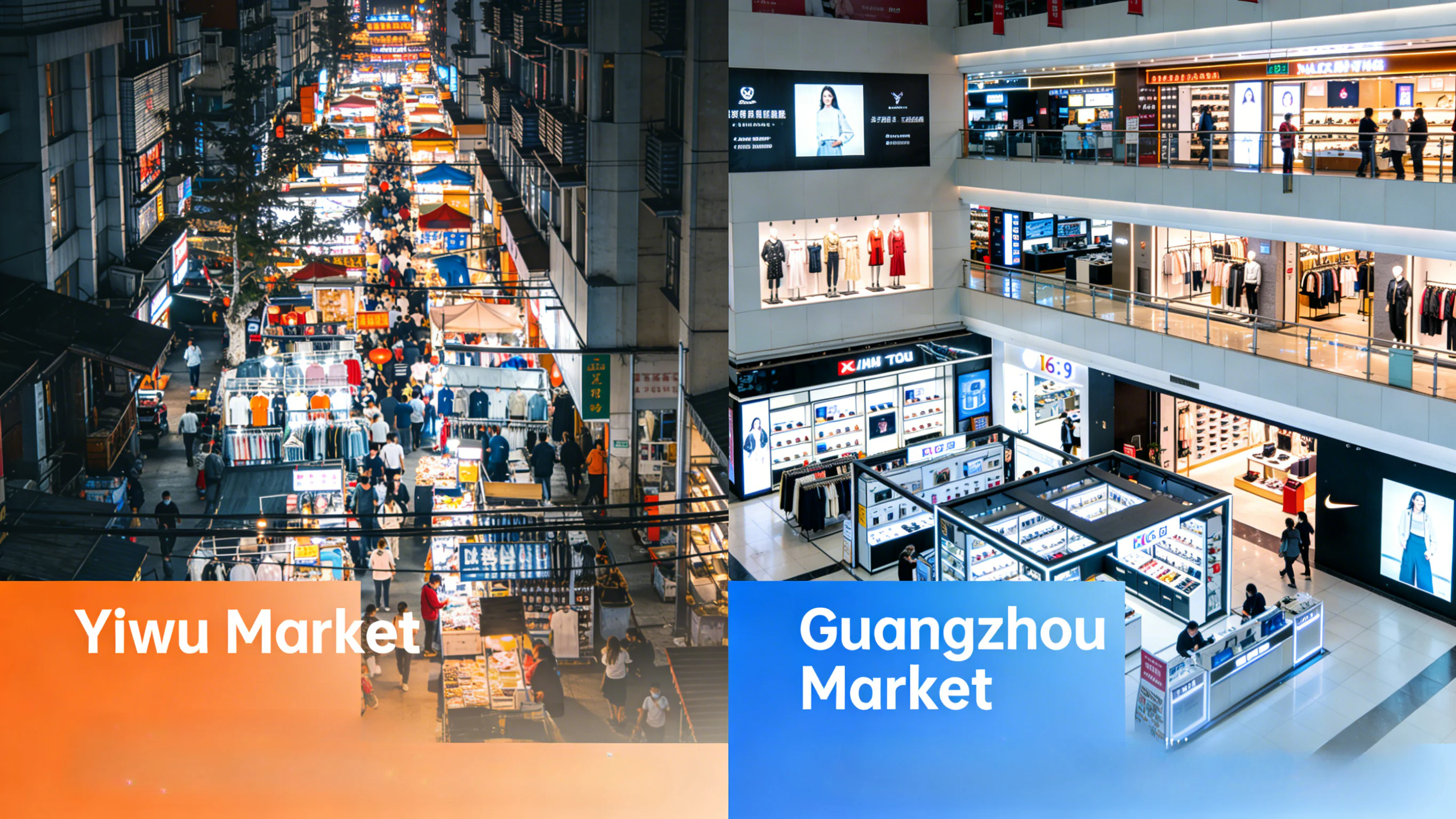
Yiwu Market vs Guangzhou Market: Key Differences
| Comparison Factor | Yiwu Market | Guangzhou Market |
|---|---|---|
| Market Positioning | Large-scale wholesale hub focused on small commodities | Wholesale markets closely tied to regional manufacturing clusters |
| Product Focus | Extremely wide variety, high SKU density, standardized products | Category specialization with deeper product lines |
| Typical Buyers | First-time buyers, small and mid-sized importers | Experienced buyers, brands, bulk purchasers |
| Order Model | Mixed SKUs, small and flexible orders | Single-category orders, volume-oriented sourcing |
| Minimum Order Quantity (MOQ) | Generally low and flexible | Higher and more volume-dependent |
| Customization Capability | Limited; mainly packaging or minor modifications | Strong OEM/ODM and product development support |
| Supplier Type | Trading companies, distributors, factory-backed booths | Factory-backed suppliers and manufacturers |
| Pricing Logic | Competitive unit pricing for small orders | Better cost efficiency as order volume increases |
| Quality Consistency | Varies by supplier and batch | More stable for repeat and long-term orders |
| Negotiation Style | Fast-paced and price-focused | Specification- and process-driven |
| Sourcing Speed | Fast quotation and product comparison | Slower initial stage, more structured process |
Common Mistakes First-Time Buyers Make When Comparing Yiwu and Guangzhou
Navigating China’s wholesale markets for the first time can be overwhelming. Many buyers make mistakes that cost time, money, and opportunities. Here are the most common pitfalls and practical ways to avoid them.
Mistake 1: Assuming Product Categories Are the Same
Many first-time buyers think Yiwu and Guangzhou sell the same types of products. This misunderstanding often leads to wasted trips and missed sourcing opportunities.
- Yiwu Market: Best for small commodities, gifts, stationery, home accessories, and seasonal items. Its strength lies in wide variety and fast turnover, making it ideal for testing multiple products quickly.
- Guangzhou Market: Focused on industrial clusters, with deeper expertise in apparel, electronics, shoes, bags, and customized home appliances. Suppliers are often factory-backed and more capable of handling large orders or custom designs.
Tip: Before visiting, map your product needs against the market’s strengths. If your goal is testing multiple SKUs at low cost, Yiwu is better. If you need custom designs, quality consistency, or scalable production, focus on Guangzhou.
Mistake 2: Underestimating MOQ Differences
Minimum order quantities (MOQs) vary significantly between the two markets, and ignoring this can create unexpected costs or block order placement.
- Yiwu: Flexible, small trial orders are common. Many suppliers accept orders as low as 10–50 units per SKU.
- Guangzhou: MOQs are higher, often 500–1,000 units or more per product, reflecting their factory-focused model and bulk production orientation.
Tip: Always ask suppliers for MOQ before negotiating price. Use Yiwu to test new products, and move to Guangzhou only after you are ready to scale.
Mistake 3: Assuming Yiwu Quality Is Always Lower
It’s a common misconception that Yiwu products are cheap and low quality, while Guangzhou guarantees better standards. Reality is more nuanced.
- Yiwu has thousands of trading companies and distributors, meaning quality varies by supplier and product type. Many suppliers can meet international standards if you verify samples.
- Guangzhou’s factory-backed suppliers often provide more consistent quality for bulk orders, but this comes at the cost of higher MOQs.
Tip: Always request samples, check certifications, and if necessary, hire a third-party inspection service. Quality depends on the supplier, not the
Mistake 4: Ignoring Logistics and Consolidation
Many first-time buyers focus only on price or product, forgetting that shipping and order consolidation are critical parts of sourcing in China.
- Yiwu Market: Because it specializes in small commodities, it’s common to source from multiple suppliers for one shipment. Without proper consolidation, buyers can face higher shipping costs, fragmented shipments, and more complex customs paperwork.
- Guangzhou Market: Orders usually come from a single factory, which simplifies shipping. However, small or mixed orders may be less cost-efficient if the factory expects bulk shipments.
Tip: Plan logistics before visiting the market. Decide whether to use:
- A local freight forwarder
- A consolidation warehouse
- Or a sourcing agent who can handle multiple suppliers in one shipment
Factoring shipping and consolidation costs into your product selection and unit pricing will prevent unexpected delays or extra expenses.
Mistake 5: Navigating Without a Plan (or an Agent)
Both Yiwu and Guangzhou are massive and complex markets. Visiting without a clear plan can lead to confusion, wasted time, and missed opportunities.
- First-time buyers often wander from booth to booth without clear goals, overwhelmed by the sheer number of suppliers.
- Language barriers and market layout complexity can make negotiations difficult, especially in Yiwu where many suppliers are trading companies handling multiple factories.
Tip:
- Prepare a list of target products, categories, and potential suppliers before you go.
- Consider hiring a local sourcing agent for your first visit. A good agent can:
- Translate and negotiate effectively
- Identify reliable suppliers quickly
- Assist with logistics and quality checks
A well-prepared plan ensures you make the most of your market visit, reduces stress, and increases the chance of finding the right suppliers efficiently.
A Simple Decision Framework for First-Time Buyers
For first-time buyers, the real challenge is not choosing Yiwu Market or Guangzhou Market, but understanding which sourcing model aligns with their business stage, risk tolerance, and supply chain capability. The following decision framework translates market differences into practical sourcing decisions.
Step 1: Clarify Your Business Model Before Choosing a Market
Before comparing Yiwu and Guangzhou, buyers should first define how they plan to sell the products they source.
- Resellers, online sellers, and market testers typically need:
- Multiple SKUs
- Small quantities
- Fast product rotation
→ Yiwu Market fits this model well
- Brand builders, distributors, and wholesale importers usually need:
- Fewer SKUs
- Stable quality
- Long-term supply consistency
→ Guangzhou Market is structurally more suitable
Key insight:
Yiwu is optimized for breadth and flexibility, while Guangzhou is optimized for depth and production stability. Choosing the wrong market often leads to unnecessary MOQ pressure or inconsistent quality.
Step 2: Match Product Complexity to the Right Supply Chain
Product complexity is a more important factor than most first-time buyers realize.
- Low-complexity products
(simple structures, low material variation, limited quality risk)
→ Yiwu’s trading-company-based ecosystem performs efficiently. - High-complexity products
(electronics, garments with sizing, products requiring compliance or tooling)
→ Guangzhou’s factory-direct ecosystem reduces miscommunication and rework.
Practical rule:
If your product requires technical drawings, size grading, electrical safety standards, or repeated revisions, Guangzhou suppliers are generally better equipped.
Step 3: Evaluate MOQ Risk vs. Inventory Risk
Many buyers focus only on MOQ numbers, but the real issue is inventory risk.
- Yiwu Market
- Low MOQ per SKU
- Higher SKU variety
- Ideal for testing demand and reducing dead stock
- Guangzhou Market
- Higher MOQ per SKU
- Lower SKU variety
- Better for predictable demand and replenishment cycles
Practical guidance:
If your demand forecast is uncertain, Yiwu helps you spread risk across SKUs.
If demand is stable, Guangzhou helps you lower unit cost through scale.
Step 4: Factor in Supplier Relationship Depth
Supplier relationships differ significantly between the two markets.
- In Yiwu, suppliers often act as:
- Aggregators
- Trading companies
- Multi-category sellers
Relationships are transactional and order-based.
- In Guangzhou, suppliers are more likely to be:
- Factories or factory-linked
- Production-oriented
- Long-term contract friendly
Why this matters:
If your business depends on consistent reorders, price stability, or priority production slots, Guangzhou suppliers provide stronger long-term leverage.
Step 5: Assess Operational and Language Capability
First-time buyers often underestimate operational complexity.
- Yiwu is relatively beginner-friendly:
- English usage is more common
- Market layout is standardized
- Products are easy to compare
- Guangzhou markets are more fragmented:
- Category-specific clusters
- Stronger reliance on Chinese communication
- More negotiation at the production level
Decision tip:
If you lack on-the-ground support or Chinese communication ability, Yiwu offers a lower learning curve.
Step 6: Plan the Logistics Model in Advance
Logistics should not be an afterthought.
- Yiwu sourcing often involves:
- Multiple suppliers
- Mixed product categories
- Mandatory consolidation before export
- Guangzhou sourcing usually involves:
- Fewer suppliers
- Larger shipment volumes
- Direct factory-to-port logistics
Strategic insight:
Buyers sourcing from Yiwu should budget for consolidation and quality checks, while Guangzhou buyers should prepare for longer lead times and higher upfront commitments.
Top 20 China Wholesale Markets
| Wholesale Market | City / Region | Main Product Categories | Market Highlights |
|---|---|---|---|
| Yiwu International Trade City | Yiwu, Zhejiang | Small commodities, accessories, toys, stationery | World’s largest small commodity hub with massive SKU variety |
| Guangzhou Wholesale Markets (General Cluster) | Guangzhou, Guangdong | Apparel, electronics, bags, accessories | Leading fashion & general wholesale cluster |
| Huaqiangbei Electronics Market | Shenzhen, Guangdong | Consumer electronics & components | China’s most famous electronics sourcing hub |
| Shanghai South Market | Shanghai | Clothing, accessories, footwear | Large-scale high-quality wholesale complex |
| Keqiao Textile Market | Shaoxing, Zhejiang | Fabrics & textiles | Asia’s largest fabric sourcing market |
| Hangzhou Silk Market | Hangzhou, Zhejiang | Silk & textiles | Renowned for quality silk and home textiles |
| Shenzhen SEG Electronics Market | Shenzhen, Guangdong | Electronics & tech accessories | Major electronics auxiliary sourcing zone |
| Datang Sock Market | Zhuji, Zhejiang | Socks & hosiery | China’s largest specialized sock wholesale hub |
| Guangzhou International Textile City | Guangzhou, Guangdong | Fabrics & accessories | Major fabric & trim sourcing cluster |
| Baiyun Leather Goods Market | Guangzhou, Guangdong | Leather bags & luggage | Large leather goods wholesale center |
| Shantou Chenghai Toys Market | Shantou, Guangdong | Toys, educational products | Famous specialized toy market |
| Linyi Yongxing International Toy Market | Linyi, Shandong | Toys & gifts | One of China’s largest toy wholesale centers |
| Linyi Car & Motorcycle Fittings Town | Linyi, Shandong | Auto & motorcycle parts | Major auto parts distribution hub |
| Nan’an Sanitary Ware Market | Nan’an, Fujian | Sanitary ware & plumbing | Largest plumbing product sourcing base |
| Foshan Ceramics Market | Foshan, Guangdong | Ceramic & tile products | Leading ceramics manufacturing market |
| Shanghai Qipu Road Clothing Market | Shanghai, Shanghai | Clothing & fashion | Historic apparel wholesale district |
| Zhili Children’s Wear Market (Huzhou) | Huzhou, Zhejiang | Kids & baby clothing | Specialized children’s apparel hub |
| Haining China Leather City | Haining, Zhejiang | Leather & footwear materials | Large leather trade zone |
| Duqiao Glasses City | Linhai, Zhejiang | Eyewear & optical products | Major wholesale glasses market |
| Guangzhou Chaoyang Stationery Market | Guangzhou, Guangdong | Stationery & office supplies | South China’s largest stationery center |
FAQ
What types of products are best sourced from Yiwu Market?
Yiwu Market is best known for small commodities such as household items, gifts, accessories, toys, stationery, and promotional products. It is ideal for buyers testing multiple SKUs or sourcing mixed product categories in small quantities.
Is product quality from Yiwu Market lower than Guangzhou?
Not necessarily. Yiwu quality varies by supplier and product type. While Guangzhou often offers more consistent quality for large-scale orders, many Yiwu suppliers provide reliable quality for standardized, low-complexity products when properly vetted.
Can buyers source from both Yiwu and Guangzhou at the same time?
Yes. Many experienced buyers use Yiwu for product testing and SKU expansion, then shift production to Guangzhou or other manufacturing hubs once demand is confirmed. This hybrid sourcing strategy helps balance risk and cost.
Do I need to visit China to source from Yiwu or Guangzhou?
While visiting helps, it is not mandatory. Many buyers source remotely through verified suppliers or work with local sourcing agents who handle supplier selection, sampling, quality control, and logistics coordination on their behalf.
Should I use a sourcing agent when comparing Yiwu and Guangzhou?
For first-time buyers, a sourcing agent can help identify the right market, negotiate MOQs, consolidate shipments, and manage quality control. This often saves time and cost—especially when sourcing across multiple China wholesale markets.
Conclusion
The comparison between Yiwu Market and Guangzhou Market is not about choosing the “better” market, but about choosing the right one for your sourcing stage and product needs. Yiwu excels in variety and flexibility, while Guangzhou offers deeper manufacturing support and scalability. Beyond these two, China’s wholesale ecosystem includes many specialized markets that can deliver better results when matched correctly with product categories.
For first-time buyers, the biggest challenge is not lack of options—but lack of structure. This is where working with an experienced sourcing partner can make a real difference. Choose Sosourcing, with on-the-ground access to multiple China wholesale markets, help buyers avoid common mistakes, coordinate suppliers across regions, manage consolidation and quality checks, and build a sourcing strategy that fits long-term growth—not just the first order.
A clear understanding of China’s wholesale markets, combined with the right local support, is often the key to sourcing efficie