Introduction: Navigating the 2026 Silver “Super-Cycle”
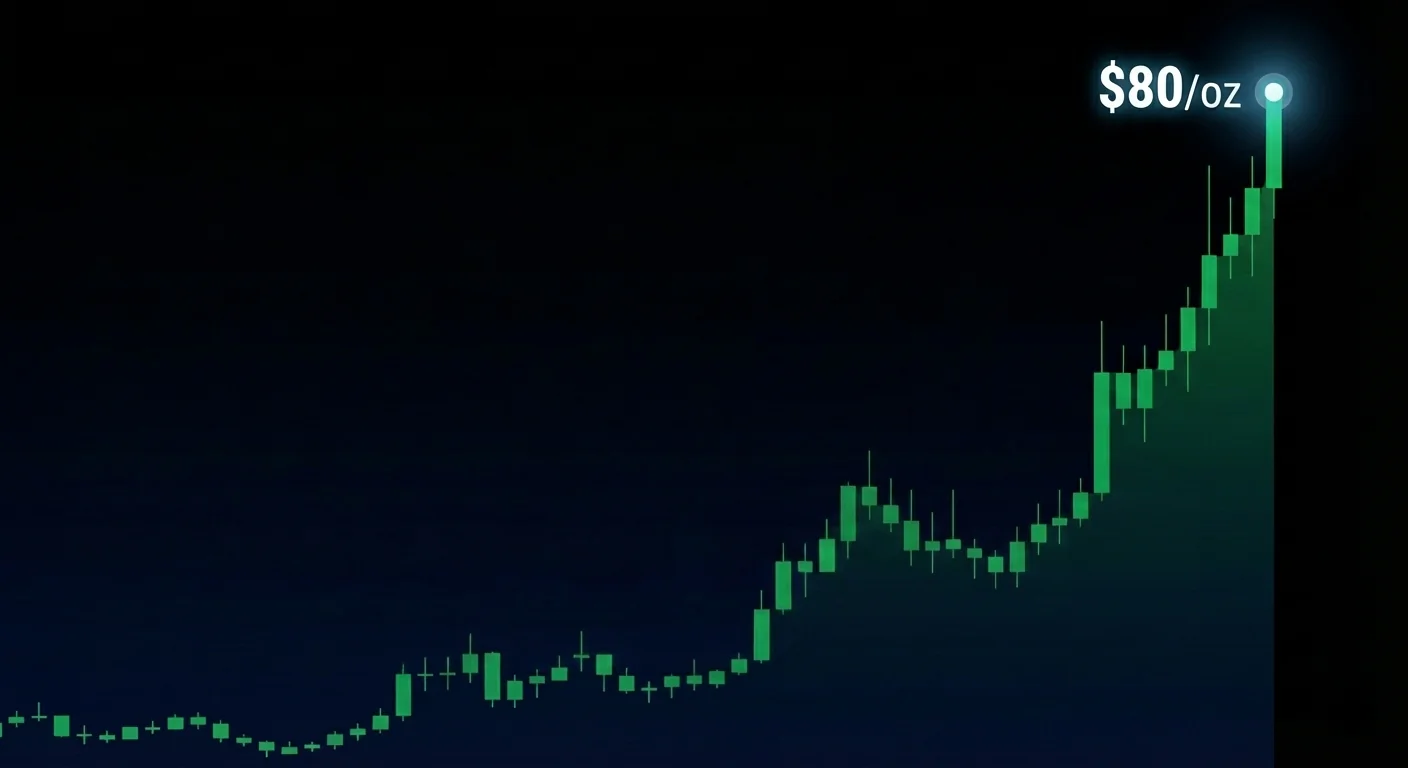
The silver market has entered a historic “Super-Cycle” in 2026. For wholesalers and manufacturers, silver has shifted from a standard commodity to a strategic bottleneck as spot prices consistently shatter the $80 per ounce resistance level. This rally is not speculative; it is driven by a profound structural misalignment between green-tech demand and physical supply.
Why Silver Prices Are Surging
Unlike previous peaks, the 2026 price hike is fueled by three “non-negotiable” industrial drivers:
Solar Revolution: The mass adoption of TOPCon and HJT solar cells has significantly increased silver loading requirements per watt.
AI Infrastructure: Massive AI data centers require silver’s unmatched conductivity for high-density power electronics.
Supply Deficit: We are now in the fifth consecutive year of structural deficit, exacerbated by new export quotas from key producers like China.
The Wholesaler’s Crisis
Wholesalers are currently caught in a triple squeeze: margin compression as costs rise faster than retail prices, inventory volatility, and strained liquidity due to the massive capital required to maintain physical stock.
To survive this $80/oz era, businesses must move beyond traditional procurement. Here are five manufacturing-driven solutions to mitigate risk and maintain profitability in the 2026 silver market.
In the $80/oz silver era, the most effective way to beat the price hike is to remove the dependency on silver itself. Dematerialization—the process of using less or no precious metal without sacrificing performance—has evolved from a R&D luxury to a 2026 manufacturing necessity.
1. The Rise of Copper-Metallization (The Silver-Free Future)
The transition from silver paste to Copper-based alternatives is the primary trend for 2026. Copper offers 95% of silver’s conductivity at roughly 1% of its cost.
Solar PV (HJT & TOPCon): Leading manufacturers like LONGi and Jinko Solar have accelerated the mass production of Copper-plated HJT (Heterojunction) modules. By replacing silver fingers with electroplated copper, manufacturers are slashing metallization costs by up to 50%.
Semiconductor Packaging: In AI data centers and EV power modules, copper pillar plating and redistribution layers (RDL) are replacing traditional silver-based interconnects to handle higher current densities while stabilizing the Bill of Materials (BOM).
2. Low-Silver & Alloyed Pastes: The “Silver-Coated Copper” Solution
For industries where pure copper isn’t yet viable due to oxidation concerns, Silver-Coated Copper (Ag@Cu) has become the 2026 industry standard.
Ag@Cu Technology: This involves coating a copper core with a thin, protective layer of silver. This hybrid approach can reduce total silver consumption by 70%–80% while maintaining excellent volume resistivity (as low as 5.9 μΩ·cm).
Advanced Sintering: New photonic sintering and low-temperature curing techniques allow these low-silver pastes to bond effectively to flexible substrates used in wearables and IoT devices, ensuring durability without the high price tag.
3. Expert Insight: The Wholesaler’s Strategic Shift
Wholesalers can no longer act as passive middlemen. To hedge against 2026 price volatility:
Expert Recommendation: Wholesalers must audit their supply chains and prioritize partnerships with Original Design Manufacturers (ODMs) that have already integrated “Low-Ag” or “Ag-Free” certifications. By securing distribution rights for copper-metallized products now, you insulate your catalog from future silver price spikes.
Solution 2: Building a Circular Silver Supply Chain to Mitigate Scarcity
In the 2026 market, physical availability is as critical as price. Establishing a Circular Manufacturing ecosystem allows wholesalers to transform waste into a “private mine,” drastically reducing reliance on volatile spot markets.
1. Mining the “Urban Mine”: High-Value E-Waste Recovery
With silver trading above $80/oz, the economic viability of Urban Mining has reached a tipping point. Previously discarded components are now high-yield assets.
Secondary Resource Extraction: Modern 2026 recovery tech now efficiently extracts 99.9% pure silver from decommissioned photovoltaic panels, spent EV circuit boards, and AI hardware.
Wholesaler Leverage: Forward-thinking wholesalers are implementing “Buy-back” or “Core Exchange” programs. By incentivizing downstream clients to return silver-bearing scrap, you secure a steady stream of raw material that is decoupled from global geopolitical supply shocks.
2. Direct Refinery Partnerships: Eliminating the “Silver Premium”
Traditional procurement often carries heavy premiums (markups above the spot price). Wholesalers are now bypassing middleman traders to work directly with Precious Metal Refiners.
Closed-Loop Tolling: Instead of selling manufacturing scrap at a loss, wholesalers send industrial waste, filings, and defective units directly to refiners to be converted back into Industrial Grade Silver.
Tolling Fee Model: By paying a flat “processing fee” rather than the full market price, wholesalers can re-integrate recycled silver into their production lines, effectively bypassing the 2026 spot price surge.
Circular Silver Supply Chain
3. Data Insights: The Economic Impact of Recycled Silver in 2026
According to the 2026 Industrial Metals Sustainability Report, the transition to circularity is no longer optional:
Market Share: Secondary silver (recycled) is projected to contribute over 28% of total industrial supply by the end of 2026.
Cost Reduction: Wholesalers utilizing a closed-loop system report a 15% to 22% reduction in net material costs compared to those relying solely on “virgin” silver bullion. This margin is often the difference between profit and loss in the current high-interest-rate environment.
Industry Takeaway: In 2026, the most resilient wholesalers are those who treat their Supply Chain as a Circle. Prioritize vendors who offer “Recycled Content Certification”—it is a hedge against both cost and future carbon-border taxes.
In a market where silver oscillates between $75 and $85 per ounce, “wait and see” is no longer a viable procurement strategy. To maintain price stability in 2026, wholesalers must transition from traditional purchasing to Dynamic Hedging—using financial instruments to lock in costs and protect profit margins.
1. Future-Proofing with Futures: COMEX & SGE Contracts
Professional wholesalers are increasingly using silver futures to “freeze” their raw material costs for 6–12 months in advance.
COMEX (Global Benchmark): Utilizing 1,000-oz Silver Futures or Micro Silver Futures (1,000 oz) allows you to hedge specific inventory batches. If the market spikes to $100, your futures gain offsets your physical procurement loss.
SGE (Shanghai Gold Exchange): For wholesalers sourcing from Asia, SGE’s Ag(T+D) deferred contracts offer a unique advantage. They allow for flexible physical delivery and are highly liquid, providing a localized hedge against 2026’s regional price premiums and export quotas.
2. The Shift to “Silver-Indexed Pricing” Models
The era of the “Fixed Price Annual Contract” is effectively over in 2026. To maintain transparency and trust, wholesalers are adopting Silver-Indexed Pricing (SIP).
Transparency: Instead of a flat product price, your quote to retailers is split into two parts: Base Manufacturing Cost + Current Silver Index.
Mechanism: The price is adjusted monthly or quarterly based on the average London Bullion Market Association (LBMA) or COMEX fix. This ensures that you don’t bear the full brunt of a sudden surge, while also offering customers a price drop if the market cools.
3. Boosting Capital Efficiency with Silver Options
High volatility in 2026 requires surgical precision in risk management. While futures lock you into a price, Options give you the right but not the obligation to buy.
Capping the Upside Risk: By purchasing Call Options, a wholesaler can set a “Price Ceiling.” If silver jumps 20% overnight, your option protects you at the strike price.
Preserving Liquidity: Unlike futures, which require maintaining margin accounts (which can be drained during high volatility), options have a fixed upfront cost (the premium). This keeps your working capital free for operations—a critical advantage as 2026 interest rates remain elevated.
Strategic Note: For 2026, the most effective financial strategy is a “Collars” approach—buying a call option to protect against spikes while simultaneously selling a put option to offset the cost. This creates a predictable “price band” for your entire 2026 fiscal year.
In 2026, the primary risk for silver wholesalers is no longer just price—it is physical availability. With national export quotas tightening and mining output in decline, the “Just-in-Time” global supply chain has become a liability. To survive, businesses must pivot toward geographic diversity and defensive inventory models.
1. Geographic De-Risking: Beyond the “Choke Points”
Reliance on a single region for refined silver (particularly East Asia) is a critical vulnerability in the current geopolitical climate.
The “China Plus One” Strategy: As 2026 export quotas on strategic metals tighten, wholesalers must actively onboard secondary suppliers in primary mining jurisdictions like Mexico (the world’s top producer) and Peru.
Sovereign Risk Management: By sourcing directly from Latin American refiners or established aggregators in Canada, you bypass potential trade bottlenecks and tariffs that affect Asian exports, ensuring a continuous flow of .999 silver grain and bars.
2. The VMI Advantage: Securing “First Right of Refusal”
When a Physical Squeeze occurs—where paper contracts trade freely but physical metal is scarce—standard buyers are left waiting. Vendor Managed Inventory (VMI) is the 2026 solution.
Priority Access: By signing a VMI agreement with a major trading house (e.g., Glencore, Trafigura) or a direct mining partner, you shift the inventory burden upstream. The supplier holds the metal in a local hub, but you contractually own the “first right of refusal.”
Buffer Against Shock: In the event of a sudden shortage, VMI partners are legally obligated to service their contract holders before releasing metal to the spot market.
3. From JIT to JIC: The “Just-in-Case” Economic Model
For decades, Just-in-Time (JIT) manufacturing was the gold standard for efficiency. In the 2026 silver deficit, JIT is a recipe for production-halting stockouts. The shift to Just-in-Case (JIC) is now a financial imperative.
The Cost-Benefit Calculation:
The Cost of JIC: Holding 3 months of silver inventory at $80/oz incurs higher carrying costs (insurance + storage + capital interest).
The Cost of Stockouts: However, the opportunity cost of shutting down a solar panel assembly line or an EV component factory for two weeks due to a silver shortage dwarfs the inventory holding cost.
Strategic Reserve: Experts recommend maintaining a “Red Zone” safety stock—physical silver held in a secure, non-bank vault—equivalent to 15% of annual consumption, purely as an insurance policy against supply chain rupture.
The premium you pay for carrying extra inventory in 2026 should be viewed not as an inefficiency, but as a business continuity insurance premium.
Global logistics map: Mexico & Peru supply lines.
Solution 5: Product Premium Elevation & Brand Value Strategy
When raw material costs triple, the “Cost-Plus” pricing model fails. In the $80/oz era, wholesalers must pivot from selling silver weight to selling performance and design. By increasing the perceived value of the final product, you dilute the impact of the raw silver price on the total Bill of Materials (BOM).
1. High Value-Added Transformation: The “Dilution” Strategy
The goal is to lower the percentage of the product’s price that is dictated by silver. This requires a shift in manufacturing focus:
For Jewelry & Luxury Goods (Design-Driven):
Shift focus from heavy, solid-silver chains to intricate, low-weight designs. By incorporating labor-intensive craftsmanship (filigree, diamond cutting) or mixed materials (enamel, gemstones), you justify a higher price point based on artistry rather than gram weight.
Result: The customer pays for the brand and design, making the $80/oz spot price a secondary factor.
For Electronics & Industrial (Performance-Driven):
Market your components based on Performance-per-Watt or Durability rather than commodity specs. If your silver-plated connector offers 20% better thermal efficiency for AI servers, the client is paying for the efficiency gain, not the metal.
Value Engineering: Use the price hike as a catalyst to upgrade product specs, moving your catalog into “Premium” or “High-Rel” (High Reliability) categories where margins are naturally fatter.
2. The “Silver Surcharge” Mechanism: Radical Transparency
Trying to hide price hikes erodes trust. Instead, borrow a proven strategy from the logistics and aviation industries: the Floating Surcharge.
The “Airline Model”: Just as airlines charge a base fare plus a “Fuel Surcharge,” wholesalers should implement a “Silver Fluctuation Surcharge.”
Base Price: Covers manufacturing labor, overhead, and profit (Fixed).
Surcharge: A separate line item calculated weekly based on the London Fix or COMEX average (Variable).
B2B Client Acceptance:
Education: Explain to procurement officers that this mechanism actually protects them. If silver prices drop back to $70, the surcharge automatically decreases.
Transparency: By separating the metal cost from the manufacturing cost, you demonstrate that you are not price-gouging, but simply passing through a global market reality.
Strategic Takeaway: In 2026, Transparency is the new Loyalty. B2B buyers are more likely to accept a formula-based surcharge than an arbitrary 30% price hike. It shifts the conversation from “Why are you so expensive?” to “How do we manage this market together?”
Conclusion: From Passive Victim to Active Defender
The silver market of 2026 offers a harsh lesson: this is not a temporary fluctuation; it is a structural revaluation. The convergence of the solar boom, AI infrastructure demands, and chronic mining deficits has established a new price floor. For wholesalers and manufacturers, waiting for prices to “return to normal” is no longer a strategy—it is a risk to survival.
The businesses that will thrive in this $80/oz era are those that stop viewing silver as a simple commodity and start treating it as a strategic asset requiring sophisticated management.
Your Immediate Action Checklist
To pivot your business from reactive panic to proactive control, execute these three steps this week:
Audit Your Exposure: Conduct a forensic audit of your product lines to quantify the exact “Silver Loading” per SKU.
Source Alternatives: Begin qualification testing for suppliers capable of Copper-Metallization or Silver-Coated Copper technologies.
Initiate Hedging: Don’t gamble on the spot market; start a pilot financial hedging program covering at least 20% of your quarterly volume.
Navigating the 2026 silver crisis requires more than just theory—it requires the right connections. Contact Sosourcing today to leverage our vetted network of “Low-Silver” manufacturers and innovative ODMs. Let us help you implement these cost-saving technologies and build a resilient supply chain that turns this market challenge into your competitive advantage.
Contains information about the traffic source or campaign that directed user to the website. The cookie is set when the GA.js javascript is loaded and updated when data is sent to the Google Anaytics server
6 months after last activity
_gat
Used to monitor number of Google Analytics server requests when using Google Tag Manager
1 minute
_gid
ID used to identify users for 24 hours after last activity
24 hours
_ga_
ID used to identify users
2 years
_gali
Used by Google Analytics to determine which links on a page are being clicked
30 seconds
_ga
ID used to identify users
2 years
__utmx
Used to determine whether a user is included in an A / B or Multivariate test.
18 months
__utmv
Contains custom information set by the web developer via the _setCustomVar method in Google Analytics. This cookie is updated every time new data is sent to the Google Analytics server.
2 years after last activity
__utmc
Used only with old Urchin versions of Google Analytics and not with GA.js. Was used to distinguish between new sessions and visits at the end of a session.
End of session (browser)
__utmb
Used to distinguish new sessions and visits. This cookie is set when the GA.js javascript library is loaded and there is no existing __utmb cookie. The cookie is updated every time data is sent to the Google Analytics server.
30 minutes after last activity
__utmt
Used to monitor number of Google Analytics server requests
10 minutes
__utma
ID used to identify users and sessions
2 years after last activity
_gac_
Contains information related to marketing campaigns of the user. These are shared with Google AdWords / Google Ads when the Google Ads and Google Analytics accounts are linked together.
90 days
Google reCAPTCHA helps protect websites from spam and abuse by verifying user interactions through challenges.
Name
Description
Duration
_GRECAPTCHA
Google reCAPTCHA sets a necessary cookie (_GRECAPTCHA) when executed for the purpose of providing its risk analysis.