
Last month, an online buyer in California ordered a small gadget from a China-based seller. The seller provided a China Post Tracking Number, but after a few updates, the tracking page suddenly stopped refreshing for more than 10 days. Unsure whether the package was lost, stuck in customs, or simply delayed, the buyer started searching for answers—only to realize that China Post tracking works very differently from local postal systems.
Situations like this are extremely common. Millions of international shoppers rely on China Post every year, yet most users do not fully understand what the tracking number means, how to read it, or why updates sometimes disappear for days or even weeks. This lack of clarity leads to confusion, unnecessary disputes, and missed delivery expectations.
This guide is designed to eliminate that confusion. You will learn exactly what a China Post Tracking Number is, how it is structured, how to track it properly, why it may not update, and how tracking performance varies across different countries. You will also discover how to spot fake or recycled tracking numbers—an issue many first-time buyers unknowingly encounter.
What Is a China Post Tracking Number?
A China Post Tracking Number is a unique code assigned to your parcel when it is shipped through China Post services such as Registered Mail, ePacket, Air Parcel, or EMS. This number allows you to track your package as it moves through each stage of the international shipping process—from acceptance in China, to export processing, to final delivery by carriers like USPS, Royal Mail, or Canada Post.
For example, a tracking number such as LX123456789CN indicates an ePacket shipment to the United States, where “L” represents a lightweight registered service and “CN” confirms the parcel originated in China. More than 70% of small China-to-overseas parcels use this 13-character format, making it one of the most widely recognized tracking structures in global e-commerce.
You can think of a China Post Tracking Number as a digital trail. Each scan—“Accepted,” “Departed Facility,” “Handed Over to Airline,” “Customs Released,” and “Out for Delivery”—creates a verifiable milestone. This helps buyers confirm their package is moving as expected, resolve delivery issues faster, and shop internationally with greater confidence.
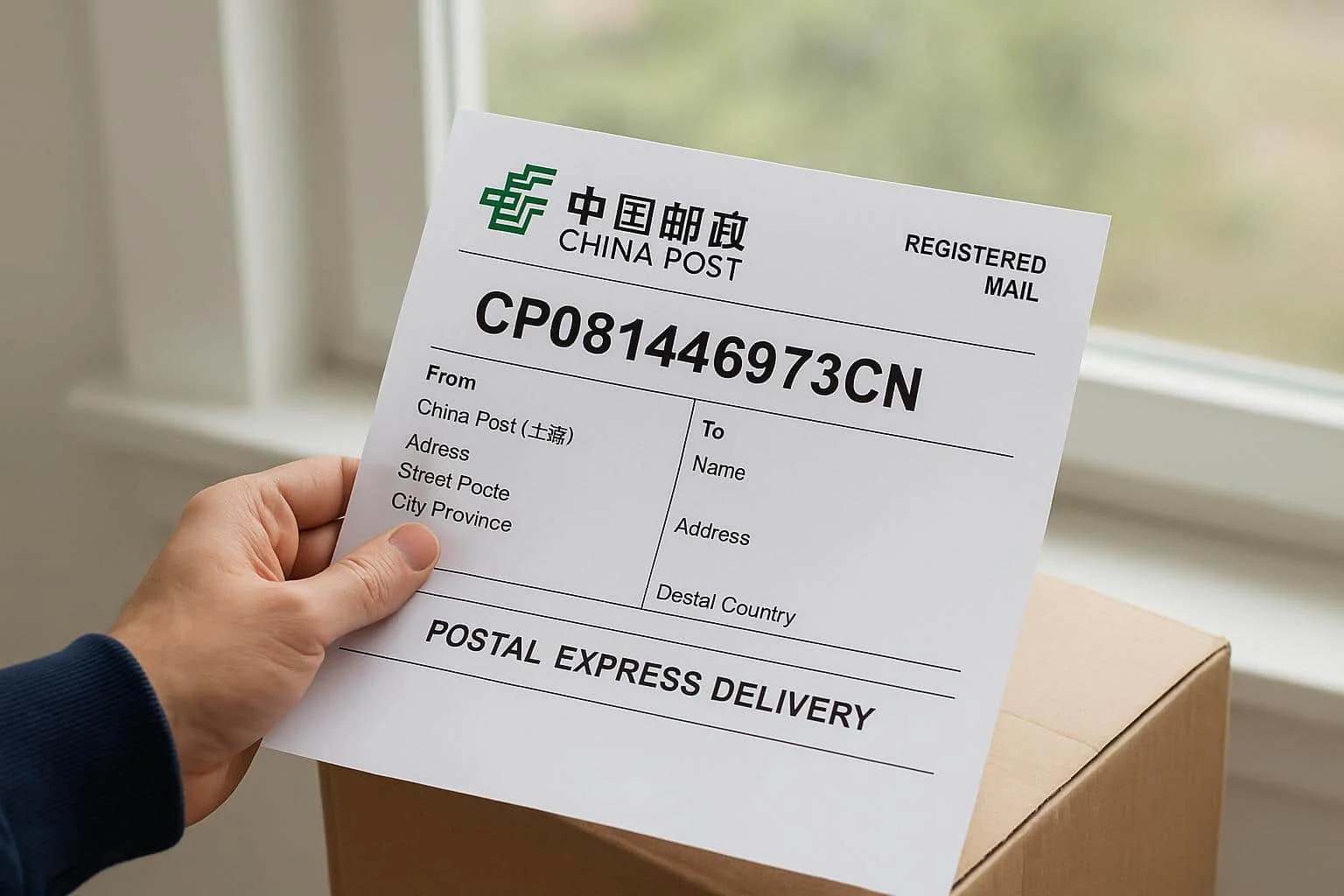
What Does a China Post Tracking Number Look Like?
A standard China Post Tracking Number follows the Universal Postal Union (UPU) format: 13 characters consisting of two letters, nine digits, and the country code “CN.” This structure helps postal systems worldwide recognize and route parcels correctly. Most China Post services—ePacket, Registered Air Mail, and EMS—use this internationally accepted format.
Here are common examples with meanings:
- LX123456789CN — ePacket service (L indicates lightweight registered mail).
- RD987654321CN — Registered Mail (R stands for registered items).
- EE123498765CN — EMS express service (E indicates express delivery).
Each prefix (the first two letters) identifies the shipping service type. “L” often refers to ePacket or small registered parcels, “R” to registered air mail, and “E” to EMS. According to China Post’s public data, over 80% of outbound parcels under 2 kg use prefixes L or R, making them the most common formats international buyers encounter.
You may also see U-prefix numbers, such as UN123456789CN, which typically represent economy services with limited or no end-to-end tracking. These numbers often update only during export processing, which explains why many economy parcels appear “stuck” online.
To help you quickly identify the format, consider this simplified reference table:
| Prefix Example | Service Type | Tracking Level | Notes |
|---|---|---|---|
| LX / LN / LA | ePacket | Full Tracking | Fastest among low-cost options |
| RB / RF / RR | Registered Mail | Partial to Full Tracking | Common for <2 kg parcels |
| EE / EM | EMS Express | Full Tracking | Priority handling |
| UN / UV | Economy Mail | Limited Tracking | Often no updates after export |
Understanding these prefixes allows you to identify the shipping method at a glance, estimate delivery speed more accurately, and detect unusual or incorrect tracking numbers before delays occur.
How to Track a China Post Tracking Number?
Tracking a China Post Tracking Number is straightforward when you know where to look and which platforms offer the most reliable updates. Below are clear, step-by-step instructions to help you check your package status quickly and accurately.
Step 1: Locate Your Tracking Number
Your China Post Tracking Number usually comes from the seller or the platform where you placed your order. It follows a 13-character format like LX123456789CN or RB987654321CN.
Step 2: Choose a Tracking Platform
You can track your parcel using several official and third-party websites. Each provides different levels of detail.
Recommended platforms include:
- China Post Official Website (for origin-country scans)
- 17Track.net (global tracking with multi-carrier support)
- Track718.com (good for cross-border e-commerce parcels)
- USPS.com, RoyalMail.com, CanadaPost.ca (for final delivery updates)
Step 3: Enter the Tracking Number
Copy and paste your China Post Tracking Number into the search bar of your chosen platform. Click “Track,” “Search,” or “Check Status.”
Step 4: Review Each Tracking Event
You will see milestones such as:
- Acceptance
- Departed from Facility
- Handed Over to Airline
- Customs Clearance
- Arrived at Destination Country
- Out for Delivery
If your parcel is headed to the United States, final tracking events will appear on USPS once the shipment is handed over.
Step 5: Keep Monitoring Until Delivery
Long cross-border shipping may include periods with no updates. This is normal—especially during international transit or customs processing.
Quick Tip:
For the most complete tracking history, use two platforms together:
- China Post (for origin)
- The destination-country postal service (for final delivery)
This ensures you never miss important updates.
Why Is China Post Tracking Not Updating?
It’s common for China Post Tracking to pause for several days—sometimes even longer—during international shipping. This does not necessarily mean your package is lost. Cross-border parcels move through multiple logistics stages, and certain periods naturally have fewer or no scans. Below are the most frequent reasons your tracking may stop updating.
1. The Package Is in International Transit (No Scan Points in Between)
Once China Post hands the parcel over to the airline, there are no scanning stations during the actual flight or sea journey. Tracking may remain unchanged for a week or longer.
Example:
A buyer in California ordered phone accessories via ePacket. The last update showed “Handed over to airline” on March 2. The next update didn’t appear until March 12 when the parcel reached a USPS facility. The package was moving normally the entire time—there were simply no scans during transit.
2. Customs Processing Causes Delays
Customs agencies may hold packages longer for inspection, documentation checks, or random screening. During this time, tracking often appears stuck.
Example:
A parcel shipped to New York showed “Arrived at Destination Country” for six days. When the next update appeared, it changed directly to “Customs Clearance Completed”. The package wasn’t lost; it was waiting in the customs queue.
3. Economy Shipping Has Limited Tracking Updates
Services starting with prefixes like UN, UV, or UW offer minimal scans. Many economy parcels only show:
- Departure from China
- Final delivery in the destination country
No intermediate scans are recorded.
Example:
A customer in the UK ordered inexpensive craft supplies using economy shipping. Tracking only showed “Departure from outward office of exchange” in China and then no updates for 22 days—until it suddenly updated to “Delivered.”
4. Peak Season Congestion Slows Down Scanning
During shopping festivals like Double 11, Black Friday, or Christmas, sorting centers are overloaded. Staff prioritize dispatching parcels rather than scanning every step.
Example:
An ePacket to Texas during December stayed on “Departed from Facility” for nine days. When the next update appeared, the parcel had already reached the U.S. and cleared customs.
5. Carrier Handover at the Destination Country Is Delayed
After arriving in the destination country, the parcel must be passed to the local postal service (USPS, Royal Mail, Canada Post, etc.). If the receiving carrier delays scanning, tracking appears frozen.
Example:
A parcel reached Los Angeles on April 5 but did not show a USPS update until April 10. The lag occurred because USPS had a backlog before the first inbound scan.
6. System Synchronization Issues or Temporary Technical Problems
Sometimes China Post’s system or the destination country’s postal database updates late. This causes tracking information to appear several hours—or even days—behind actual movement.
Example:
A buyer in Australia noticed no updates for four days. When the system refreshed, multiple events suddenly appeared at once, showing the package had been scanned but not synchronized promptly.
7. The Seller Generated a Label but Has Not Shipped the Package Yet
Some sellers create a tracking label early, even before dropping off the package at China Post. Until the parcel receives its first physical scan, tracking will show “Shipping info received” or “Pre-advice.”
Example:
A seller on AliExpress printed the label on May 1, but the package wasn’t handed to China Post until May 4. Tracking did not move until the first scan at the sorting center.
What to Do When Tracking Stops Updating?
- Allow 5–10 days for normal transit gaps.
- Check both China Post and the destination country postal website.
- If there are no updates after 20–30 days, contact the seller for sup
Most tracking gaps are normal and usually resolve on their own.
5. Delivery Time Comparison for China Post Tracking Across Different Countries
China Post delivery speed varies significantly depending on the destination country, shipping method (ePacket, Registered Air Mail, EMS), customs efficiency, and local postal operations. Understanding these differences helps customers set realistic expectations when interpreting their China Post Tracking Number updates. Below is a comparative overview of typical delivery times to major regions based on the most commonly used service—China Post Registered Air Mail.
| Destination Country / Region | Estimated Delivery Time | Tracking Update Frequency | Notes |
|---|---|---|---|
| United States | 10–25 days | Moderate | Usually faster due to strong USPS integration. |
| United Kingdom | 7–20 days | Moderate–Fast | Often quicker due to efficient customs clearance. |
| Australia | 10–30 days | Moderate | Longer delays may occur during peak seasons. |
| Canada | 12–35 days | Slow–Moderate | Customs and extreme weather can slow processing. |
| Germany | 10–25 days | Moderate–Fast | DHL integration improves tracking speed. |
| France | 10–28 days | Moderate | Occasional customs delays. |
| Brazil | 20–60 days | Slow | Longer transit and customs inspection times. |
| South Africa | 20–50 days | Slow | Tracking may show long periods without updates. |
| Russia | 15–40 days | Slow–Moderate | Long domestic transit distances. |
| Southeast Asia (e.g., Malaysia, Singapore) | 7–15 days | Fast | Geographic proximity supports faster delivery. |
Can a China Post Tracking Number Be Fake?
Yes. In certain situations, a China Post Tracking Number can be fake or invalid, especially when dealing with unreliable sellers or unverified online shops. A genuine China Post tracking code (including services like china post air tracking number) will always follow official formats and show at least one system entry—such as “Acceptance” or “Shipment Received”—within a reasonable time frame. When a number never appears in the China Post database, continuously returns “No Tracking Information,” or shows inconsistent updates across different tracking sites, it often indicates that the tracking number was never registered in the postal system. While most sellers provide legitimate numbers, buyers should remain cautious, verify updates through official platforms, and look for early signs of validity before assuming the parcel is in transit.
1. Check Whether the Number Follows Official China Post Formats
China Post uses standardized 13-character tracking formats, such as:
- R/L/C/E/U + 9 digits + CN (e.g., RA123456789CN)
- YT / YD / LW prefixes for ePacket and special lines
Anything that deviates—missing letters, incorrect length, unusual suffixes, or strings like “CHN” instead of “CN”—is a strong indicator of fraud.
2. Validate Early Tracking Events: Does It Stay in “Pre-Shipment” Too Long?
Fraudulent numbers often show only one status:
- “Electronic information received”
- “Pre-advice received”
- “Waiting for pickup”
A genuine parcel usually gets a physical scan within 1–7 days after the seller submits the information. If a number remains in pre-shipment for more than 15–20 days, chances are it was never handed over to China Post.
Case Example:
A customer ordered a phone accessory. The tracking number stayed in “Shipping information submitted by the sender” for 27 days. The seller kept giving excuses until the buyer found out the number was never registered with China Post.
3. Cross-Check Multiple Global Tracking Platforms
A real China Post tracking number will return consistent results across major platforms such as:
- China Post official website
- 17Track
- Cainiao
- USPS (once the parcel enters the United States)
- ParcelsApp
If a number shows data on one website but returns “Not Found” or “Number does not exist” on all others, the tracking information may be partially spoofed.
Case Example:
A parcel showed “Delivered” on an unknown third-party site but “Number not found” on China Post and USPS. The number belonged to an unrelated shipment, proving the seller had reused a legitimate number from another customer.
4. Look for Illogical or Impossible Tracking Movements
Fake numbers sometimes contain obviously unrealistic updates, including:
- Jumps between countries in a few hours
- Updates out of chronological order
- Scans in cities where China Post has no export operations
- Delivery events occurring before the actual purchase date
Case Example:
A buyer noticed the parcel moved from Shenzhen to New York in 8 hours—an impossible timeline even for express shipments. The number turned out to be artificially generated.
5. Check Whether the Number Was Used Before
Some sellers recycle old China Post tracking numbers. Luckily, you can check whether the number has a previous history.
Red flags include:
- Tracking records from years ago
- Delivery events unrelated to your location
- A first recorded movement long before the purchase date
Case Example:
A buyer checked the history of a tracking number and found old records dating back to 2021. The seller had reused an expired ePacket tracking ID to appear legitimate.
6. Compare Origin Information Against the Seller’s Stated Warehouse Location
If the seller claims to ship from Guangzhou but the tracking begins in Shanghai, Suzhou, or an entirely different province, the number may belong to someone else.
Sometimes the mismatch is harmless, but if the seller cannot explain the discrepancy, treat it as suspicious.
Case Example:
A store claiming “Shenzhen warehouse” provided a tracking number showing origin scans in Heilongjiang—2,000+ km away. The number belonged to another customer’s past order.
7. Be Cautious if the Seller Provides a Tracking Number Immediately
Real shipping requires processing time. If a seller provides a China Post tracking number within minutes or within the same hour after payment, it may be auto-generated or fabricated.
Authentic logistics workflows include:
- Packaging
- Booking
- First-mile pickup
- Acceptance scan
Case Example:
A buyer received a tracking number 30 minutes after checkout. The tracking never moved and was later confirmed as unregistered.
8. Lack of Transparency or Evasive Behavior From the Seller
If a seller cannot state:
- The shipping method
- The expected transit time
- Whether the shipment uses China Post, ePacket, or China Post Air
- Why tracking hasn’t updated
…it often signals they’re not providing a real, active tracking number.
Case Example:
When asked why tracking was not updating, the seller repeatedly replied “Please wait patiently.” Eventually, the tracking number expired without ever being registered in the China Post system.
China Post Tracking Number FAQs
Why does my China Post tracking number show “Not Found”?
A new China Post tracking number may take 24–72 hours to appear in the system, especially during peak seasons. If your number shows “Not Found” for more than 7–10 days, it usually means the seller has not handed the parcel to China Post or the number may be invalid.
Why does my tracking number show delivery in a different city or country?
China Post recycles some tracking numbers or different carriers may reuse old IDs. If the delivery location does not match your address, the number may be recycled, incorrect, or fake. Contact the seller immediately.
Can China Post tracking numbers expire?
Yes. China Post tracking numbers typically expire after 180 days from the last scan. After expiration, older records may no longer be searchable in public systems.
Can a China Post parcel be lost?
While rare, parcels can be lost due to customs confiscation, damaged packaging, or misrouting. If there is no update for 30+ days, open a dispute with the seller or platform.
Why did my tracking number change after the parcel left China?
Some economy and special-line services assign a new local tracking number once the parcel reaches the destination country. The seller should provide the updated number.
an China Post tracking numbers be reused?
Yes. Some numbers are reused after expiration, and some sellers accidentally—or intentionally—use old tracking IDs. Always check for past delivery history.
Conclusion
Understanding how a China Post Tracking Number works can save you time, reduce stress, and help you make smarter decisions when buying or shipping products from China. From decoding the tracking format, to knowing how to troubleshoot delays, to recognizing fake or inactive numbers, you now have a complete framework for interpreting every stage of the shipping journey. With this knowledge, you can better anticipate delivery timelines, avoid scams, and resolve issues more efficiently.
However, if you frequently purchase from China or manage cross-border shipments for your business, tracking numbers are only one part of the challenge. Finding reliable suppliers, negotiating pricing, verifying product quality, and ensuring safe delivery require hands-on expertise that most buyers simply do not have the time to build.
This is where sosourcing can help. As a professional China sourcing agent, sosourcing provides end-to-end procurement support—from supplier verification and price negotiation to quality inspection and shipping coordination. You get full transparency, genuine tracking numbers, and a trusted partner who manages your orders with accuracy and accountability.If you have any procurement needs, please feel free to contact us!