Low cost country sourcing has become a pivotal strategy for global buyers seeking cost savings, scalability, and supply chain diversification. Yet, deciding between low cost country sourcing and traditional sourcing requires a careful evaluation of cost, quality, risk, and strategic value. This article compares the two sourcing models across direct and indirect costs, manufacturing capabilities, quality assurance, risk exposure, and long-term strategic benefits. It also provides practical guidance on how buyers can choose the right model based on product type, order volume, and risk tolerance, helping procurement teams make informed, data-driven decisions.
Understanding the Two Sourcing Models
Before comparing low cost country sourcing vs traditional sourcing, it is essential to clearly define each model, understand how they operate, and recognize their typical roles within global supply chains.
What Is Low Cost Country Sourcing?
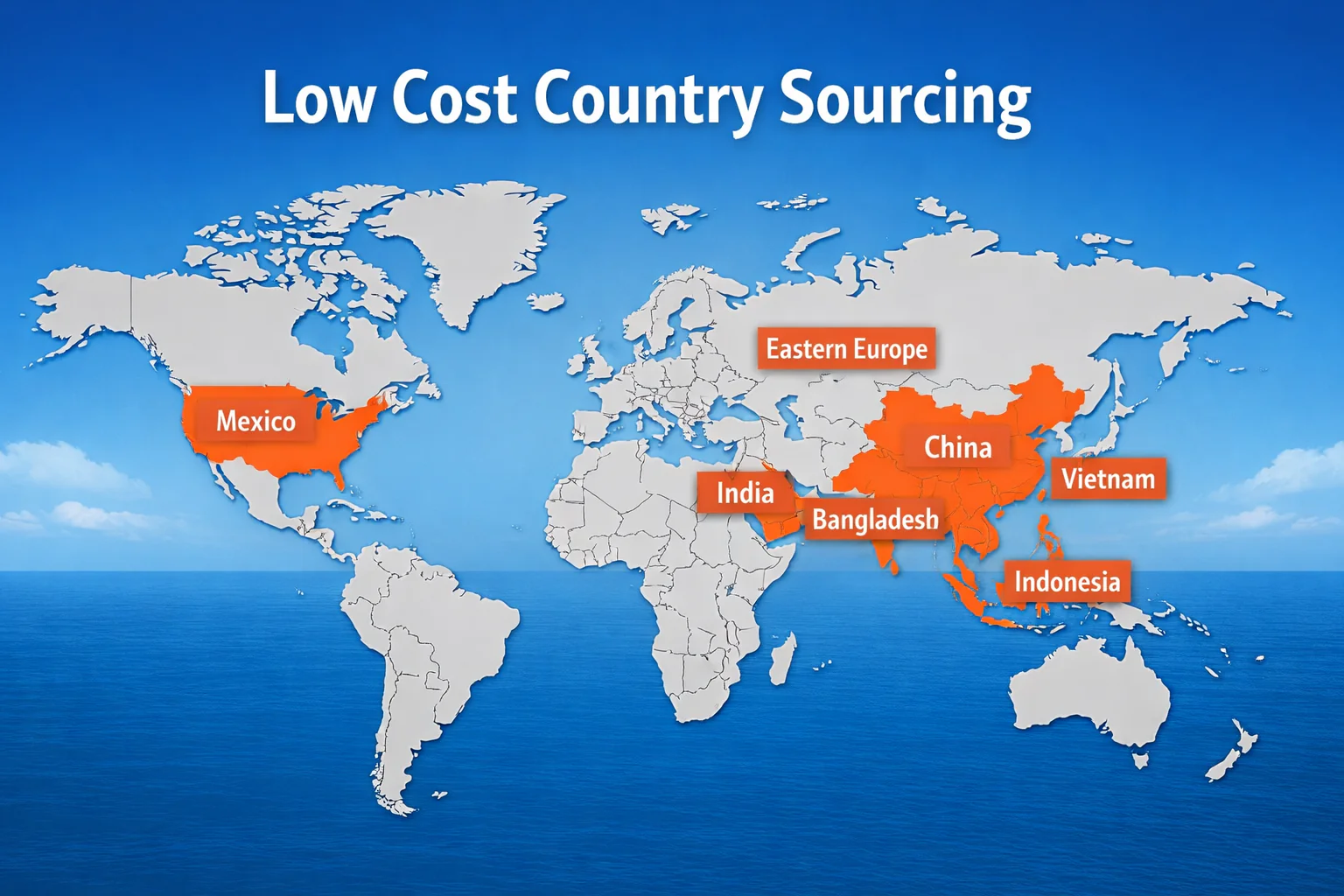
Low cost country sourcing (LCCS) refers to the practice of procuring products, components, or manufacturing services from countries where labor and production costs are significantly lower than in developed economies. Common low cost sourcing destinations include China, Vietnam, India, Bangladesh, Indonesia, as well as selected countries in Eastern Europe and Latin America.
From an operational perspective, low cost country sourcing is not simply about finding cheaper suppliers. Instead, it is a structured sourcing strategy built on several systemic cost advantages:
- Labor cost differentials: According to data from the World Bank and global consulting firms, manufacturing labor costs in many low cost countries can be as low as 20%–40% of those in mature Western markets.
- Economies of scale: Established industrial clusters—such as China’s electronics, furniture, and hardware manufacturing hubs—enable suppliers to achieve lower per-unit costs through high-volume production.
- Integrated supply ecosystems: Close proximity to raw materials, component suppliers, packaging providers, and logistics services helps reduce overall procurement and operational expenses.
In industries such as consumer goods and light manufacturing, multinational buyers have reported procurement cost reductions of 10%–30% through effective low cost country sourcing, without altering product design or core specifications. This explains why LCCS has become a central pillar of global procurement strategies over the past two decades.
Key Low Cost Country Sourcing Destinations (Overview)
| Country / Region | Typical Industries | Key Cost Advantages | Common Sourcing Considerations |
|---|---|---|---|
| China | Consumer goods, electronics, furniture, hardware | Mature supply chains, strong manufacturing scale, competitive labor costs | Supplier selection, IP protection, quality consistency |
| Vietnam | Apparel, footwear, furniture, light manufacturing | Lower labor costs, growing export capacity, trade agreement benefits | Capacity limitations, supplier experience gaps |
| India | Textiles, auto parts, industrial components | Large labor pool, engineering talent, cost-efficient production | Lead time variability, infrastructure differences |
| Bangladesh | Apparel and textiles | Extremely low labor costs, strong garment specialization | Compliance management, limited product diversification |
| Indonesia | Furniture, rubber products, consumer goods | Abundant natural resources, competitive labor | Logistics complexity, regional supply fragmentation |
| Eastern Europe (e.g. Poland, Romania) | Automotive parts, machinery, metal components | Proximity to EU markets, skilled workforce | Higher costs than Asia, limited scale in some sectors |
| Mexico | Automotive, electronics assembly, consumer products | Nearshoring advantages, shorter lead times to North America | Wage inflation, regional security considerations |
What Is Traditional Sourcing?
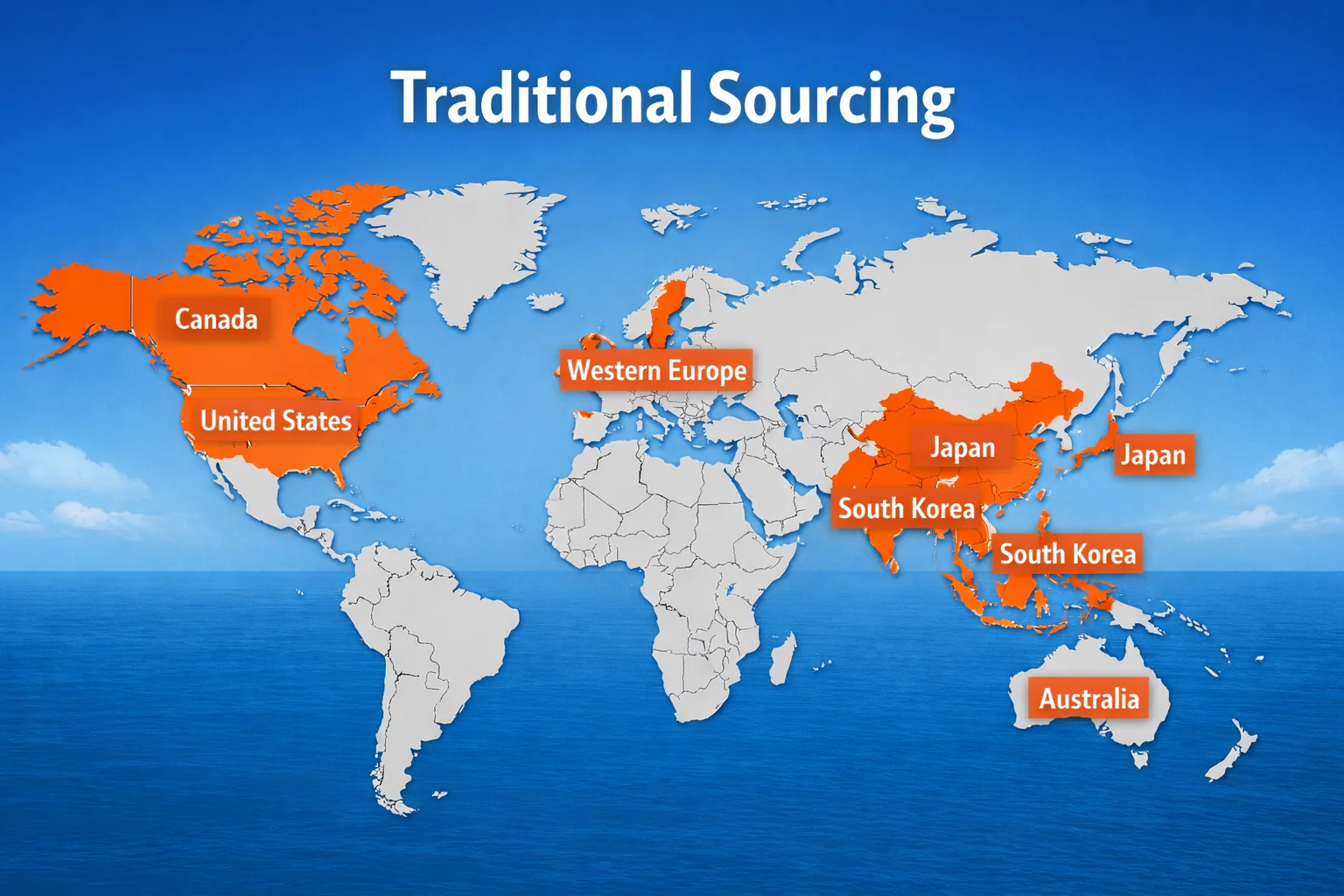
Traditional sourcing generally refers to procuring goods or manufacturing services from domestic suppliers or from high-cost countries such as the United States, Western Europe, or Japan. This model dominated early industrial supply chains and remains prevalent in highly regulated or technically complex industries.
Key characteristics of traditional sourcing include:
- Geographic and cultural proximity, enabling faster communication and easier collaboration
- Mature regulatory and compliance frameworks, with clear standards for product safety, labor practices, and environmental responsibility
- High consistency in quality and process control, making it suitable for precision-driven or brand-sensitive products
Traditional sourcing continues to be the preferred option in sectors such as medical devices, aerospace components, and high-end custom manufacturing. In these industries, buyers often prioritize reliability, regulatory compliance, and technical expertise over minimizing unit cost.
Typical Traditional Sourcing Regions
| Country / Region | Common Industries | Key Strengths | Typical Limitations |
|---|---|---|---|
| United States | Medical devices, aerospace, industrial equipment | Advanced technology, strong IP protection, strict compliance standards | High labor and operating costs |
| Western Europe (e.g. Germany, France) | Automotive, machinery, precision manufacturing | Engineering expertise, process reliability, regulatory maturity | Cost-intensive production, longer supplier onboarding |
| Japan | Electronics, automotive components, high-precision parts | Exceptional quality control, lean manufacturing culture | High unit costs, limited flexibility for large-scale production |
| South Korea | Electronics, semiconductors, industrial components | Advanced manufacturing, strong R&D capabilities | Rising labor costs, supplier concentration |
| Canada | Industrial goods, natural resource processing | Stable supply environment, proximity to U.S. market | Smaller manufacturing scale, higher costs |
| Australia | Mining equipment, specialized manufacturing | High safety and compliance standards | Limited industrial diversity, high production costs |
Cost Comparison: Where Do the Real Savings Come From?
Cost is often the primary driver behind sourcing decisions, but in practice, the true cost difference between low cost country sourcing and traditional sourcing extends far beyond unit price alone. To make informed procurement choices, buyers must evaluate direct costs, indirect and hidden expenses, and the total cost of ownership (TCO) across the entire supply chain lifecycle.
Direct Cost Differences
At a surface level, direct costs are where low cost country sourcing shows its most immediate advantage. These costs typically include unit manufacturing price, labor, raw materials, and basic production overhead.
In many low cost sourcing destinations, manufacturing wages remain significantly lower than in developed markets. Industry data consistently shows that labor costs in major low cost countries can be 50%–80% lower than those in the United States or Western Europe. Combined with large-scale production capabilities and established supplier ecosystems, this cost structure often translates into unit price reductions of 10%–30% for standardized products such as consumer goods, furniture, lighting, and hardware.
Traditional sourcing, by contrast, tends to involve higher direct costs due to elevated wages, stricter environmental and labor regulations, and higher facility operating expenses. While these costs contribute to product reliability and compliance, they can limit pricing flexibility—particularly in price-sensitive markets.
However, direct cost savings alone rarely tell the full story. A lower unit price does not automatically guarantee lower overall procurement cost, which is why experienced buyers look beyond headline pricing.
Indirect and Hidden Costs
Indirect and hidden costs often determine whether low cost country sourcing delivers real savings or unexpected overruns. These costs may not appear in initial supplier quotations but can materially impact profitability.
Common indirect costs associated with low cost country sourcing include:
- Logistics and transportation expenses, especially for long-distance or multi-modal shipping
- Tariffs, duties, and customs compliance costs, which vary by destination and trade policy
- Inventory holding costs driven by longer lead times and larger minimum order quantities
- Quality management and rework costs, including inspections, returns, and corrective actions
- Communication and coordination costs, such as time zone differences and language barriers
For example, a buyer may secure a 20% lower unit price from a low cost country supplier, only to see part of that savings offset by higher freight rates, increased safety stock, and additional quality inspections.
Traditional sourcing typically involves shorter lead times, simpler logistics, and lower coordination overhead, which can reduce these indirect expenses. In some cases—especially for low-volume, time-sensitive, or highly customized products—these advantages help traditional sourcing remain competitive despite higher unit prices.
Total Cost of Ownership (TCO) Perspective
To accurately compare low cost country sourcing vs traditional sourcing, procurement teams increasingly rely on a Total Cost of Ownership (TCO) framework. TCO evaluates all costs incurred throughout the product lifecycle, rather than focusing solely on the purchase price.
A comprehensive TCO analysis may include:
- Unit manufacturing cost
- Transportation, tariffs, and insurance
- Inventory and warehousing expenses
- Quality assurance and compliance costs
- Supplier management and administrative overhead
- Risk-related costs, such as delays or supply disruptions
When viewed through a TCO lens, low cost country sourcing often delivers the greatest value for high-volume, standardized products with predictable demand. In these scenarios, scale efficiencies and cost advantages typically outweigh longer lead times and added complexity.
Conversely, traditional sourcing may achieve a lower TCO for low-volume, high-mix, or highly regulated products, where responsiveness, reliability, and reduced risk compensate for higher direct costs.
The real savings in sourcing do not come from chasing the lowest unit price, but from aligning the sourcing model with product requirements, demand patterns, and operational capabilities. Low cost country sourcing and traditional sourcing each offer cost advantages under different conditions, and understanding their full cost implications is essential for sustainable procurement decisions.
Cost Comparison: Low Cost Country Sourcing vs Traditional Sourcing
| Cost Category | Low Cost Country Sourcing | Traditional Sourcing |
|---|---|---|
| Direct Manufacturing | Lower | Higher |
| Labor | Much lower | High |
| Material | Competitive | High |
| Logistics & Transportation | Higher | Lower |
| Tariffs & Duties | Variable | Low |
| Inventory / Safety Stock | Higher | Lower |
| Quality Control / Rework | Moderate | Lower |
| Communication / Coordination | Higher | Lower |
| Total Cost of Ownership (TCO) | Often lower for high-volume products | Sometimes lower for low-volume or high-mix products |
Quality Comparison: Is Lower Cost Equal to Lower Quality?

A common concern among procurement professionals is whether low cost country sourcing compromises product quality. While cost advantages are clear, the relationship between price and quality is not always linear.
Manufacturing Capability and Process Control
Manufacturing capability refers to a supplier’s ability to consistently produce products that meet technical specifications, tolerances, and functional requirements.
In low cost countries such as China, Vietnam, and India, many suppliers operate within highly developed industrial clusters that benefit from:
- Access to skilled labor for specific product categories (e.g., electronics assembly, furniture manufacturing, textiles)
- Established tooling and production lines capable of high-volume output
- Advanced machinery and semi-automated processes in mid-to-large scale factories
According to a 2023 report by McKinsey, 70% of surveyed U.S. and European buyers sourcing from China reported no significant quality compromise when proper supplier selection and monitoring practices were in place.
By contrast, traditional sourcing regions (e.g., U.S., Germany, Japan) typically feature:
- High automation levels and precision engineering
- Strict adherence to regulatory and industry standards
- Shorter production cycles allowing faster corrections and process improvements
While traditional sourcing generally offers more predictable manufacturing outcomes, the gap in capability has narrowed substantially in many low cost countries, especially for standardized products.
Quality Assurance Models in Both Sourcing Types
Quality assurance (QA) practices differ significantly between sourcing models:
Low Cost Country Sourcing:
- Frequent use of third-party inspections or in-factory auditors
- Quality checkpoints integrated at multiple stages: pre-production, in-process, and pre-shipment
- Supplier scorecards and performance metrics to monitor consistency
- Some buyers implement vendor-managed quality systems for high-volume production
Traditional Sourcing:
- Greater reliance on internal QA teams and standardized process audits
- Suppliers are often certified to international standards (ISO 9001, ISO 14001, etc.)
- Short lead times allow immediate feedback and corrective actions
The key takeaway is that quality is not inherently lower in low cost country sourcing, but it requires structured monitoring and proactive management to achieve parity with traditional suppliers.
How Maintain Quality in Low Cost Country Sourcing?
Seasoned procurement professionals use several strategies to ensure quality without sacrificing the cost benefits of low cost country sourcing:
- Rigorous Supplier Vetting
- Evaluating factory certifications, production capacity, and past performance
- Conducting sample production runs before full-scale orders
- In-Process Inspections
- Monitoring production stages to catch defects early
- Reduces rework, scrap, and shipment delays
- Third-Party Quality Audits
- Leveraging professional QA agencies to provide objective assessment
- Often includes random sample testing, measurement verification, and functional testing
- Clear Contractual Agreements
- Defining defect tolerance levels, warranty terms, and penalties
- Creates accountability while reducing disputes
- Data-Driven Performance Tracking
- Maintaining scorecards for suppliers to monitor defect rates, delivery accuracy, and response times
- Helps buyers continuously optimize sourcing decisions
Case Example: A European electronics brand sourcing from Vietnam reduced defects by 35% within one year after implementing a structured combination of third-party inspections, in-line monitoring, and supplier scorecards, all without increasing unit costs significantly.
Risk Comparison: Key Procurement Risks Across Sourcing Models

In addition to cost and quality considerations, risk management plays a critical role in sourcing decisions. Different sourcing models expose buyers to distinct operational, financial, and reputational risks. Understanding these risks and how to mitigate them is essential for maximizing the benefits of both low cost country sourcing and traditional sourcing.
Low Cost Country Sourcing Risks to Consider
Delivery Uncertainty
Long supply chains and dependence on international logistics increase the risk of shipment delays, port congestion, or customs clearance issues. For instance, during the COVID-19 pandemic, many buyers sourcing from Southeast Asia reported delays of 2–6 weeks, emphasizing the need for contingency planning and sufficient safety stock.
Supplier Transparency and Accountability
Some low cost country suppliers may lack mature reporting systems or standardized processes, making it harder for buyers to track production progress and enforce quality standards. This can lead to hidden costs, such as rework, scrap, or late deliveries, if issues are not detected early.
Compliance and Social Responsibility Risks
Labor, environmental, and safety regulations may be less strictly enforced in certain low cost countries. Multinational buyers risk reputational damage or legal consequences if suppliers fail to comply with ethical or regulatory standards. A 2023 PwC survey showed that 68% of global buyers ranked compliance and ESG risks as a top concern when sourcing from emerging markets.
Political and Economic Volatility
Currency fluctuations, trade restrictions, and sudden regulatory changes can impact both costs and supply reliability. Procurement teams need to monitor geopolitical developments and incorporate flexibility into sourcing strategies.
Risk Profile of Traditional Sourcing
Cost Rigidity
Higher labor and operational costs reduce flexibility to absorb unexpected price increases or inefficiencies. Buyers may have limited options for cost adjustments if market conditions change rapidly.
Supply Concentration Risk
Traditional sourcing often relies on a smaller set of local suppliers. If a primary supplier experiences downtime, alternatives may be limited or require lengthy qualification processes, increasing vulnerability to disruptions.
Capacity Constraints
Domestic manufacturing facilities may have limited capacity, making rapid scaling difficult. Sudden demand surges can strain production capabilities and delay fulfillment.
Regardless of the sourcing model, structured risk management is key. Common strategies include:
- Multi-Supplier and Multi-Country Sourcing: Diversifying suppliers across regions reduces dependency on any single partner or country and mitigates delivery risks.
- Local Agents or Procurement Service Providers: Using in-country partners improves oversight, quality monitoring, and regulatory compliance.For example, some buyers work with China-based sourcing agencies like sosourcing to simplify supplier management and inspections.
- Integration of Risk Management with Cost Control: Evaluating scenarios through Total Cost of Ownership (TCO) models helps quantify the financial impact of delays, defects, or tariff changes.
- Contractual Safeguards: Clear agreements on defect tolerance, delivery penalties, and warranties create accountability and reduce disputes.
- Continuous Monitoring and KPIs: Supplier scorecards tracking defect rates, delivery reliability, and responsiveness allow buyers to quickly identify and address performance issues.
Strategic Value Comparison: Beyond Cost Savings

While cost remains a major driver in sourcing decisions, the strategic value of a sourcing model extends far beyond unit price. Buyers must evaluate how each model contributes to flexibility, scalability, market responsiveness, and long-term supply chain resilience.
Benefits Of Low Cost Country Sourcing
Low cost country sourcing provides several strategic advantages beyond direct savings:
- Cost Flexibility and Scalability: Lower labor and production costs allow buyers to scale production quickly to meet seasonal or global demand without dramatically increasing unit costs.
- Supply Chain Diversification: Sourcing from multiple emerging markets reduces dependency on domestic or single-region suppliers, mitigating geopolitical and operational risks.
- Access to Specialized Manufacturing Clusters: Many low cost countries have industrial clusters with expertise in electronics, textiles, furniture, and other categories, enabling efficient high-volume production.
- Global Market Expansion Support: By leveraging local suppliers, global buyers can more easily serve regional markets, taking advantage of trade agreements and localized logistics hubs.
Case Example: A European home appliance brand diversified its sourcing to Vietnam and India, achieving a 25% reduction in production costs while expanding its market coverage in Southeast Asia. This strategic move also reduced the impact of occasional supply disruptions from a single region.
When Traditional Sourcing Still Makes Strategic Sense?
Despite the advantages of low cost sourcing, traditional sourcing remains strategically important in certain contexts:
- High Customization Needs: Products requiring complex design, strict tolerances, or rapid prototyping benefit from proximity to engineering teams and highly automated facilities.
- Regulatory or Compliance-Intensive Industries: Medical devices, aerospace components, and certain industrial products require suppliers with established certifications and compliance standards.
- Rapid Market Responsiveness: Shorter lead times from local or regional suppliers enable quick product launches and inventory replenishment, critical in fast-moving markets.
In these scenarios, the higher unit cost is offset by reduced risk, faster response, and higher reliability, making traditional sourcing a strategic choice rather than a purely cost-based one.
How to Choose Between Low Cost Country Sourcing and Traditional Sourcing?
Selecting the right sourcing model is not solely a matter of cost—it requires a strategic evaluation of product requirements, operational constraints, and risk tolerance. A structured approach helps procurement teams make informed decisions that balance cost savings, quality, and supply chain resilience.
Key Decision Factors Checklist
1. Product Type
Consider the complexity, customization, and regulatory requirements of your product. Standardized consumer goods, electronics components, and high-volume products often benefit from low cost country sourcing due to cost efficiency and scalable production. Conversely, highly customized, precision-engineered, or compliance-intensive products (e.g., medical devices, aerospace components) may be better suited to traditional sourcing regions with advanced manufacturing capabilities and strict quality assurance.
2. Order Volume
High-volume orders typically favor low cost country sourcing, where economies of scale reduce per-unit cost. Low-volume, specialized, or rapidly changing product lines may benefit from traditional sourcing, which allows faster turnaround, smaller minimum order quantities, and closer oversight.
3. Risk Tolerance
Evaluate your organization’s ability to manage delivery uncertainty, quality variability, compliance issues, and geopolitical exposure. Low cost country sourcing may require more active monitoring and risk mitigation, such as supplier audits, third-party inspections, and multi-supplier strategies. Traditional sourcing generally provides more predictability and stability but at higher cost.
Conclusion
Choosing between low cost country sourcing and traditional sourcing goes beyond comparing unit prices. While low cost country sourcing offers significant cost advantages, scalability, and access to specialized manufacturing clusters, it also requires active risk management, quality monitoring, and supplier oversight. Traditional sourcing, on the other hand, provides predictable quality, regulatory compliance, and faster market responsiveness, albeit at higher cost.
Ultimately, the right sourcing decision depends on product type, order volume, and organizational risk tolerance. By evaluating cost, quality, risk, and strategic value in a structured, data-driven manner, buyers can select the sourcing model that best aligns with their operational goals, market demands, and long-term growth strategy.
What is low cost country sourcing and how does it work?
Low cost country sourcing refers to procuring goods or components from countries with lower labor and production costs, such as China, Vietnam, India, or Bangladesh. Buyers typically work directly with manufacturers or through sourcing agents to manage supplier selection, quality control, and logistics.
Do sourcing agents or procurement service providers reduce sourcing risks?
Yes. Local sourcing agents and procurement service providers help improve supplier oversight, quality monitoring, and compliance management, especially in low cost country sourcing environments.
Is low cost country sourcing suitable for small and mid-sized companies?
Yes, but it requires realistic expectations. SMEs often benefit from low cost country sourcing for standardized products, while relying on sourcing agents or smaller order pilots to manage risk and complexity.
What sourcing trends are shaping procurement decisions today?
Key trends include nearshoring, regional diversification, ESG-driven supplier selection, and hybrid sourcing models that combine low cost and traditional sourcing.