1. Quick Answer: Where Is Lululemon Made?
If you are looking for a “Made in Canada” tag on your yoga pants, you won’t find it. Despite its origins in Vancouver, Lululemon is not made in Canada.
So, where is Lululemon made? As of 2025, Lululemon operates a purely global supply chain. The majority of its products are manufactured in Vietnam (currently the top production hub), Cambodia, Sri Lanka, China, and Bangladesh.
However, the answer is more nuanced than just one country. Lululemon uses a “Split Supply Chain” strategy:
- Raw Materials (High-Tech Fabrics): The proprietary performance fabrics (like Luon® and Nulu™) are often developed and knitted in specialized mills in Taiwan, Peru, and Japan.
- Final Assembly (Cut & Sew): The actual sewing of the garments takes place primarily in Southeast Asia to optimize costs and scalability.
2. Lululemon’s Supply Chain Map: Fabric Mills vs. Factories
To really understand where Lululemon is made, you need to separate two things:
- Where the fabric is engineered (fabric mills)
- Where the garments are cut and sewn (factories)
Lululemon doesn’t rely on a single country for both. Instead, it uses a global network of Tier 2 fabric mills and Tier 1 garment factories, disclosed in its public supplier lists.
Fabric Mills – The Technical Engine
Most of Lululemon’s performance fabrics start life in specialized textile mills, especially in Taiwan and China, with some production in Vietnam and Peru:
- Taiwan – Home to major suppliers like Eclat Textile and Everest Textile, which produce high-performance synthetic fabrics used in Lululemon’s signature materials (e.g. Luon).
- China & Taiwan (dyeing/finishing) – Facilities such as Da Yuan Dyeing Factory and Far Eastern Dyeing in Suzhou handle fabric dyeing and finishing for Lululemon.
- Peru – Apparel suppliers in Lima (e.g. Cititex / Cofaco) also provide knit fabrics and cotton-rich garments, often used in lifestyle tops and tees.
Here, the “science” happens: fiber blends, stretch, moisture-management and handfeel are engineered before anything looks like a legging.
Cut & Sew Factories – The Assembly Hubs
Once fabrics are ready, they’re shipped to Tier 1 factories that cut, sew, and finish the final products:
- Vietnam – Lululemon’s biggest production base, with large facilities (e.g. Crystal Martin, E-Top, Far Eastern Apparel Vietnam) producing leggings, bras, and outerwear at scale.
- Cambodia & Sri Lanka – Key hubs for high-volume apparel like sports bras, tanks, and shorts (e.g. Sabrina Fashion, Bodyline, Brandix).
- China – Still important for apparel, accessories, and footwear, with factories in Guangdong, Jiangsu, Fujian producing garments, bags and shoes.
- Peru, Philippines, Colombia, Turkey, etc. – Smaller share but used for specific categories like accessories, socks, and certain apparel runs.
Fabric Mills vs. Factories at a Glance
Below is a simplified view based on Lululemon’s public supplier lists and known key partners:
| Role | Main Countries (for Lululemon) | Typical Work Done for Lululemon | Example Use/Partners* |
|---|---|---|---|
| Fabric mills | Taiwan, China, Vietnam, Peru | Knit & weave performance fabrics; dyeing & finishing | Eclat, Everest, Da Yuan, Far Eastern mills |
| Cut & sew | Vietnam, Cambodia, Sri Lanka, China | Cut, sew, assemble leggings, bras, tops, outerwear | Crystal Martin, Bodyline, Brandix, Far Eastern Apparel |
| Mixed (fabric + apparel) | Vietnam, Peru | Both fabric and finished garments in some facilities | Eclat Vietnam, Cititex/Cofaco Peru |
| Accessories & footwear | Vietnam, China, Colombia, Philippines | Bags, socks, headwear, footwear, printing & trims | Broadpeak (VN), Chung Jye (CN), Crystal (CO) |
*Examples are drawn directly from Lululemon’s latest published supplier lists and known textile partners, not guesswork.
In practical terms, when your tag says “Made in Vietnam”, it often means:
- the fabric was engineered and finished in a mill in Taiwan, China, or Vietnam, and
- the garment was then cut and sewn in a large, audited factory in Vietnam or another Asian hub.
That separation—high-tech fabrics from specialist mills + streamlined assembly in garment factories—is a big part of what makes Lululemon feel very different from generic fast fashion, even if the country names on the label sometimes look similar.
3. Where Are Lululemon Leggings, Bras, Jackets and Bags Made? (Product–Country Overview)
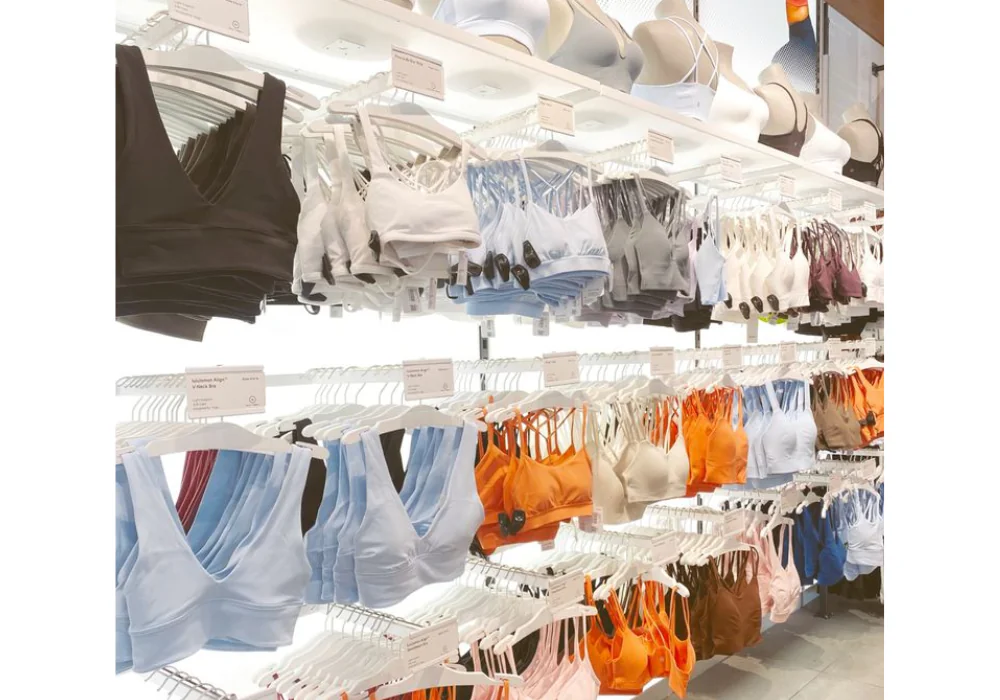
Different Lululemon product categories tend to come from different countries. That’s why your Align leggings, sports bras and belt bags often don’t share the same “Made in” label.
Here’s a quick product–country overview:
| Product Category | Primary Manufacturing Countries |
|---|---|
| Leggings (e.g. Align, Wunder Train) | Vietnam, Cambodia, Sri Lanka |
| Sports Bras | Sri Lanka, Bangladesh, Vietnam |
| Outerwear (Jackets, technical layers) | China, Indonesia, Vietnam |
| Accessories (Bags, belt bags, mats) | China, Vietnam, Taiwan |
In practice:
- If you’re wondering where are Lululemon Align leggings made, the most common origins you’ll see on the tag are Vietnam, Cambodia, or Sri Lanka.
- If you see a Lululemon belt bag made in China, that is completely normal—Lululemon often allocates bags and accessories to factories in China and Vietnam, with some mats and performance accessories linked to Taiwan.
These patterns reflect how Lululemon allocates leggings vs. bras vs. jackets vs. bags to the regions that are best set up for each type of product, rather than any simple “one country = one quality level” idea.
4. The “Made in China” Question: Quality & Authenticity
One of the most common search queries is: “Is Lululemon made in China fake?” The short answer is No.
Is “Made in China” Lululemon Fake?
While Lululemon has shifted a significant portion of its mass production to Vietnam and Cambodia to diversify risks, China remains a critical part of its authentic global supply chain.
Seeing “Made in China” on your label does not indicate a counterfeit product. In fact, Chinese manufacturers are often retained for Lululemon’s most complex and technically demanding items due to the country’s mature textile infrastructure.
Key Authentic Items Made in China:
- Accessories: The viral Everywhere Belt Bag and complex backpacks are frequently manufactured in China due to specialized hardware and sewing capabilities.
- Outerwear: High-quality down jackets (Puffers) and technical coats often rely on China’s advanced outerwear supply chain.
- High-Stretch Fabrics: Certain specialized knitting processes for specific fabric blends are still expertly handled by Chinese partners.
The Strategic Shift: Lululemon’s move toward Vietnam is primarily about risk diversification (avoiding reliance on one region) and cost management, not a drop in quality standards. Whether made in China or Vietnam, the factory must adhere to the same rigorous Vendor Code of Ethics.
5. How to Identify Your Item’s Origin (Actionable Guide)
Curious about exactly where your specific pair of Aligns came from? Here are the two ways to find out—even if you’ve already cut off the tags.
Method 1: Checking the “Rip Tag”
When you first buy a Lululemon item, it comes with a long, satin-like tag sewn into the back seam (often called the “Rip Tag” because it’s designed to be torn off).
- What to Look For: Towards the bottom of this long tag, you will see a clear text line: “Made in Vietnam,” “Made in Cambodia,” or “Made in China.”
- Pro Tip: If you care about origin, check this before you rip it out!
Method 2: The Secret “Size Dot” (For Items Without Tags)
If you bought a secondhand item or already removed the rip tag, you can still investigate using the Size Dot. This is a hidden identifier that Lululemon enthusiasts use to verify authenticity.
Where to Find It:
- Leggings: Look inside the hidden waistband pocket (usually on the left side) or the back zippered pocket.
- Bras: Look inside the slit for the cup inserts (usually on the left side).
- Tops: Check the hem or inside corner pockets.
How to Read It: The Size Dot contains the size number (e.g., 4, 6, 8) surrounded by a code (e.g., W5L12S).
- Verify Authenticity: Fake size dots often have the wrong font or lack the surrounding code.
- Trace the Batch: You can type this “W-code” into fan databases (like Lulufanatics) to find the exact “Release Date” and product name. While the dot doesn’t say the country name, knowing the release date helps you cross-reference with Lululemon’s manufacturing trends at that time (e.g., an item from 2024 is more likely Vietnam-made than one from 2015).
6. Why Not Canada? The Cost & Scale Reality
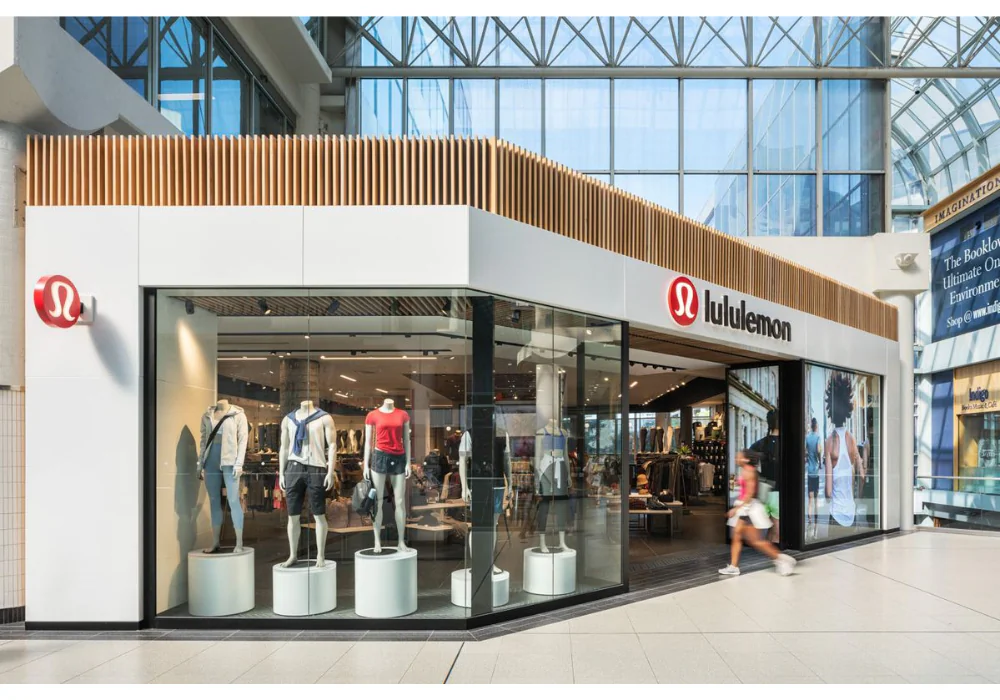
Many shoppers still associate Lululemon with “made in Canada” because the brand was born in Vancouver and early pieces were locally produced. Today, though, you’re far more likely to see Made in Vietnam or Made in Cambodia on the tag—and that’s not an accident or a “sellout move”, it’s basic supply chain reality.
Global Scale: Vancouver Can’t Supply a Global Giant
Lululemon has grown from a niche Canadian yoga brand into a global athletic giant with thousands of points of sale worldwide (own stores, outlets and retail partners). Supplying that scale requires:
- Huge, flexible capacity – multiple factories that can ramp up or down quickly for seasonal drops, color runs and new collections.
- Geographic risk diversification – if all production were in one country (let alone one city), any local disruption (labor, logistics, politics, natural disasters) could cripple supply.
Canada simply doesn’t have a large ecosystem of high-volume, performance-wear factories. Most of the world’s capacity for technical sportswear is in Asia, where entire industrial regions are built around:
- knitting performance fabrics,
- large-scale dyeing/finishing, and
- automated cutting and sewing lines for activewear.
Trying to build all of that from scratch in Vancouver would be slower, more expensive, and still smaller than plugging into existing Asian capacity.
Labor & Cost: Premium Brand ≠ Luxury Manufacturing Cost
Lululemon sells at a premium price, but it still has to run a sustainable business model:
- Canadian labor costs (wages, benefits, compliance) are dramatically higher than in Vietnam or Sri Lanka.
- Technical activewear is labor-intensive—every flat-lock seam, gusset and panel is time and skill, not just fabric.
- If everything were sewn in Canada, retail prices would have to rise significantly (or margins would collapse), pushing Lululemon closer to a tiny “luxury atelier” rather than a global performance brand.
So even if “Made in Canada” sounds emotionally appealing, it doesn’t match the volume + price point Lululemon operates at today.
Technical Specialization: Asia Is Built for Performance Wear
There’s also a skills question, not just cost. In countries like Vietnam, Sri Lanka, Cambodia and China, factories have decades of experience producing for the world’s top sportswear brands. That includes:
- Flat-lock seams on leggings and bras (critical for comfort and durability).
- Four-way stretch fabrics that need precise handling so they don’t twist, warp or lose recovery.
- Complex paneling and gussets that must line up perfectly to keep performance and fit consistent across millions of pieces.
These factories employ large numbers of workers who have spent years (sometimes decades) sewing technical knitwear and sportswear, often for multiple global brands. That depth of experience simply doesn’t exist at scale in Canada.
Put simply:
- Vancouver is the design and brand heart,
- Asia is the technical and manufacturing muscle.
That’s why your Lululemon label doesn’t say Made in Canada anymore—not because the brand has abandoned quality, but because the only way to combine high-tech fabrics, global scale, and somewhat sane prices is to manufacture where the infrastructure and skills already exist.
7. Quality Standards: Does Lululemon’s Country of Origin Affect Quality?
A lot of people worry that “Made in X” automatically means better or worse quality. With Lululemon, the reality is a bit different: the brand runs on a unified global standard, and the biggest quality driver is the fabric technology, not the country on the tag.
One Global Standard: Lululemon’s Vendor Code of Ethics
Lululemon doesn’t let each factory “do its own thing.” Every supplier—whether in Bangladesh, Vietnam, Sri Lanka, China or Cambodia—has to sign and follow the same Vendor Code of Ethics (VCoE).
According to Lululemon, this code:
- Sets minimum standards for all Tier 1 (cut & sew) and Tier 2 (fabric) suppliers.
- Covers working hours, wages, health & safety, nondiscrimination, no child labour, no forced labour, and freedom of association.
- Is a condition of doing business with Lululemon—suppliers who don’t comply can lose orders.
In other words, a legging sewn in Bangladesh and one sewn in Vietnam are supposed to follow the same ethical and quality framework. Country of origin doesn’t change the rules Lululemon expects factories to follow.
Material Is the Real Quality Driver: Nulu, Everlux & More
What you actually feel on your skin is less about where it was sewn and more about what it’s made from. Lululemon’s best-known fabrics—like Nulu™, Everlux™, Luon™, Luxtreme™ and Nulux™—are engineered with very specific performance profiles:
- Nulu™ – “Naked sensation” fabric: ultra-light, buttery-soft, four-way stretch, designed for yoga and low-impact movement.
- Everlux™ – Dual-knit, ultra fast-drying fabric for high-intensity training; cool to the touch on the inside, soft on the outside.
- Luxtreme™ / Luon™ / Nulux™ – Different blends of compression, sweat-wicking and coverage for running, training and all-day wear.
These fabrics are usually developed with specialized mills (often in Taiwan/China), then shipped to sewing factories in places like Vietnam or Sri Lanka. The feel, opacity, stretch and durability you notice are mostly about:
- the fabric recipe (fiber content, knit structure, finishing), and
- whether the factory follows Lululemon’s assembly and QC specs—not just the country name on the label.
So when you’re judging quality, a more accurate question than “Is Vietnam better than Bangladesh?” is:
Which fabric is this—Nulu, Everlux, Luxtreme or something else—and is the piece well-constructed?
That’s what really determines how long your leggings last, how they feel, and how they perform, regardless of whether the tag says Made in Vietnam, Made in Sri Lanka, or Made in China.
8. Conclusion: Where Lululemon Is Made and What It Means for You
At this point, the picture is pretty clear: Lululemon is a Canadian-designed, globally manufactured brand. The ideas, fits, and fabrics are developed out of Vancouver and other design hubs, but the actual products are made across Vietnam, Cambodia, Sri Lanka, China, Bangladesh and a handful of other countries. That’s why the answer to “where is Lululemon made?” will almost always be a mix of Asian manufacturing hubs rather than “Canada.”
For you as a shopper, the key isn’t to panic when you see Made in Vietnam or Made in China on the tag. As long as you’re buying through official Lululemon channels or trusted retailers, the products are built under the same global quality and ethics standards, using the same fabrics like Nulu and Everlux. Focus on the fabric, fit, and function more than the country line on the label—and you’ll get a much more accurate read on whether that Lululemon piece is worth it.
If you’re a brand owner, wholesaler or startup looking to build your own activewear line in the same key regions where Lululemon manufactures (such as Vietnam or China), Sosourcing can help:
- Connect you with reliable yoga wear, leggings, sports bra and activewear factories
- Assist with sampling, small test runs and bulk production
- Help you navigate communication, quality control and export so you avoid costly mistakes
If you want to set up a global manufacturing base for your own brand, you can reach out to Sosourcing to find and manage the right factories behind the label.
FAQ
Is Lululemon made in sweatshops?
Lululemon states that it does not allow sweatshop conditions in its approved factories. The brand uses a Vendor Code of Ethics, regular audits and publishes an Impact / ESG Report outlining its stance on forced labour, child labour, working hours and safety. That said, like all global apparel brands, it has faced external scrutiny and is expected to keep improving transparency and enforcement in its supply chain.
Why does my Lululemon say “Made in Cambodia”?
“Made in Cambodia” on your Lululemon tag is normal. Cambodia is one of Lululemon’s key manufacturing hubs for bras, tanks, shorts and some leggings. The fabric is often developed elsewhere (for example in Taiwan or China) and then shipped to Cambodia for cutting and sewing. Country of origin on the tag refers to where the garment was assembled, not where the fabric was made.
Are Lululemon bags made in China?
Yes, many Lululemon belt bags, backpacks and other accessories are made in China or Vietnam. China has a mature ecosystem for bag, backpack and accessory manufacturing, so Lululemon frequently uses factories there for structured items and bags. A “Lululemon belt bag made in China” from an official channel is completely normal and not a red flag by itself.
Where are Lululemon Align leggings usually made?
Most Align leggings are made in Vietnam, Cambodia and Sri Lanka, depending on the batch and collection. If you check the inner care label or the hidden size dot pocket, you’ll typically see one of these countries listed. The feel and performance come from the Nulu™ fabric and pattern, not from a specific country.
Does where Lululemon is made affect quality?
Not in the simple “Country A good, Country B bad” way. Lululemon applies the same quality specs and ethics standards to all approved factories, whether they are in Vietnam, China, Sri Lanka or Bangladesh. In practice, fabric (Nulu, Everlux, Luxtreme, etc.) + construction quality are much better indicators of performance and durability than the country line on the tag.
For more manufacturing strategies, please refer to